Aug 19, 2010
Transcript
JAD: This is Radiolab. I'm Jad Abumrad.
ROBERT: And I'm Robert Krulwich.
JAD: And today on Radiolab we're looking at memory and ...
ROBERT: Forgetting.
JAD: Right, forgetting. And we're looking at how these two processes, remembering and forgetting, are intertwined. And writer Andrei Codrescu has an idea about this.
ANDREI CODRESCU: The other day, a friend of mine was explaining how she had to move these pixels around her computer, and had to add 20 megabytes of memory to handle the operation. I had the disquieting thought that all this memory she was adding had to come from somewhere. Maybe it was coming from me because I couldn't remember a thing that day. And then it became blindingly obvious: all the memory that everybody keeps adding to their computers comes from people. Nobody can remember a damn thing. Every time somebody adds memory to their machine, thousands of people forget everything they knew. Americans are singularly devoid of memory these days. We don't remember where we came from, who raised us, when our wars used to be, what happened last year or last month or even last week. Schoolchildren remember practically nothing. I take the Greyhound bus every week, and I swear half the people on there don't know where they got on or where they're supposed to get off.
ANDREI CODRESCU: The explanation is simple: computer companies are stealing human memory to stuff their hard drives. Greyhound, I believe, has some kind of contract with IBM to steal the memory of everyone riding the bus. They're probably connected by a cable or something. Every hundred miles—poof!—another 500 megabytes gets sucked out of the passengers' brains. The computer's thirst for memory is bottomless. The more they suck, the more they need. Eventually, we'll all be walking around with a glazed look in our eyes, trying to figure out who it is we live with. And then we will forget our names and addresses and we will just be milling around trying to remember them. The only thing visible about us will be these cables sticking out of our behinds, feeding the scraps of our memory to computer central somewhere in Oblivion, USA.
ANDREI CODRESCU: I think it's time for all these memory-sucking companies to start some kind of system to feed and shelter us when we forget how to eat, walk and sleep.
JAD: Andrei Codrescu with an essay from the book 101 Damnations. And he actually has a new book of short essays about New Orleans called New Orleans, Mon Amour. Anyways, Robert?
ROBERT: Yes.
JAD: Mon amour.
ROBERT: [laughs]
JAD: Andrei, he's trying to make a point about, you know, historical amnesia and America and whatever, but what if we were to take what he's saying literally?
ROBERT: Mm-hmm.
JAD: And explore it? Like, we know you can subtract a memory, we did that earlier. But what if you could add a memory? Like, actually add a memory in—back into a brain that wasn't there before?
ROBERT: What do you mean by add memory?
JAD: Well, implant a false memory.
ROBERT: Oh.
ELIZABETH LOFTUS: Count back. Okay. Ten, nine, eight, seven, six, five, four, three, two, one. My name is Elizabeth Loftus. I'm on the faculty at the University of California-Irvine.
JAD: Depending on who you talk to, Elizabeth Loftus is either a hero or Dr. Evil.
ROBERT: [laughs]
JAD: Her research, which goes back more than two decades, has completely changed how we think about memory.
ELIZABETH LOFTUS: Well, for many ...
JAD: I spoke with her recently about it.
ELIZABETH LOFTUS: For many years, I and other psychologists were doing experiments in which we distorted the memories of events that people had actually experienced. So we would take somebody who'd seen a simulated auto accident or a simulated crime, and we would alter the details in their memory report. We'd make people believe that they saw a car go through a stop sign instead of a yield sign. And we found it was not that hard to alter people's memories of these previously experienced events. But more recently, we've gone even further and shown that you can plant entirely false memories into the minds of people, memories for things that didn't happen.
JAD: Like what?
ELIZABETH LOFTUS: Well, we planted a memory that when you were about five or six years old, you were lost for an extended period of time in a shopping mall.
[ARCHIVE CLIP, child: Mom? Mom?]
ELIZABETH LOFTUS: You were frightened, you were crying. And ultimately, you were rescued ...
[ARCHIVE CLIP: Are you lost?]
ELIZABETH LOFTUS: ... by an elderly person.
[ARCHIVE CLIP: We'll find your mother.]
ELIZABETH LOFTUS: And reunited with the family.
[ARCHIVE CLIP, child: Mommy!]
[ARCHIVE CLIP, mother: There you are!]
JAD: And how did you implant that memory?
ELIZABETH LOFTUS: We told them that we had talked to their parents, and that we'd learned some things that happened to them when they were a child.
JAD: They basically interview the subjects about their past.
ROBERT: Yeah?
JAD: They'd say, "Hey, do you remember that time when you were on the bike and you fell?"
ROBERT: Which they were making up.
JAD: No, no, no. They would start with a true story. They would start with a true story, and then they'd say, "Hey, do you remember that time"—which was true. "Remember that other time?" which was true. "And that other time?" which was true. And somewhere in the middle of all of those true stories?
ROBERT: Uh-huh.
JAD: They would slip in the lie.
ELIZABETH LOFTUS: The false, made-up story about being lost and frightened and crying. And in that particular study, we found that about a quarter of our subjects fell sway to the suggestion and they adopted it as their own memory.
JAD: A quarter of her subjects, when she checked with them later, now had in their head a memory of being lost and then found in the mall that never happened.
ROBERT: I would have been the number one guy in that quarter. [laughs]
ELIZABETH LOFTUS: What is happening in this situation is people take their image of an actual shopping center, actual family members, and they construct an experience ...
[ARCHIVE CLIP, mother: There you are!]
ELIZABETH LOFTUS: ... out of these bits and pieces. Investigators in this field have made people believe that they had accidents at family weddings, or that they were a victim of a vicious animal attack, or that they nearly drowned and had to be rescued by a lifeguard. Even with these pretty traumatic ideas, you can make people believe that it happened to them.
ROBERT: Actually, we had this very same experience. When I was in law school, we had this professor. He was a professor of property, and he was doing a lecture. And in the middle of the lecture—and this was not, you know, in any way we were not prepared for this.
JAD: Uh-huh.
ROBERT: All of a sudden, a guy zips into the class, the very front of the class, grabs something from the professor and then runs out.
JAD: Just stole it?
ROBERT: Stole it. I don't even remember what it was, but it happened so suddenly.
JAD: Uh-huh.
ROBERT: And Professor Bergen said, "Oh, my God, did any of you see the curly-haired guy? He just went—" and he just sort of threw it in. "The curly-haired guy." But it turned out that what he called the curly-haired guy, when the man came back later to present himself, was not a curly-haired guy at all. He was a straight-haired guy.
JAD: So the whole thing was staged?
ROBERT: Yeah. We were all eyewitnesses, and we all had been coached inadvertently to see something that wasn't true. And we all saw it.
JAD: What I find interesting though, is why that kind of suggestion works so well on memory. And Karim Nader, the guy we heard from earlier, scientist?
ROBERT: Mm-hmm.
JAD: He puts it this way: suppose you witness a crime, and the police ask you some questions later and they say, "Did you see a red Camaro leave the scene?"
KARIM NADER: And you're thinking about it going, "Yeah. No—you know, no red Camaro."
JAD: No, didn't see one. But then maybe the policeman asks you again, "Are you sure you didn't see one?" And suddenly you're like, "Well ..."
KARIM NADER: "I think—well, maybe there was. Maybe I forgot."
JAD: You start to question it, because as he puts it, when you are remembering something, the memory is unstable.
KARIM NADER: The memory comes back up to this unstable state.
JAD: It's being rebuilt, recreated. And in that moment, someone, without even meaning to, can slide something new in.
KARIM NADER: And so as the memory gets restored with the image of the red Camaro, the next day when the judge asks you, "Was there somebody with a—was there a red Camaro there?" from your perspective it's a real memory.
JAD: Yeah, but what's so fascinating to me about that phenomenon, assuming it's true ...
KARIM NADER: Yeah?
JAD: ... is that the red Camaro that is now in your head ...
KARIM NADER: Yeah.
JAD: ... is a vivid, technicolor, red Camaro. You can see the light bounce off the hood. It just feels real. You can taste the air.
KARIM NADER: It's amazing how detailed these things can be.
JAD: Which is why when someone contradicts your memory and says, "It didn't happen that way," you're like, "Yeah, it did. Screw you!"
ROBERT: Well, it feels like a robbery.
JAD: Right. Right.
ROBERT: They're taking it from you.
JAD: And in fact, this got Elizabeth Loftus in a lot of trouble. Back in the mid '80s there were a lot of people—I don't know if you remember this—coming forward with repressed memories. Like, "I was abused by a satanistic cult, and performed rituals and whatever." All that stuff.
ROBERT: Oh, right. I remember that.
JAD: We now know that a lot of those memories were imagined. And she says at the time, she was one of the only people to raise her hand and say, "Excuse me." And it got her in a lot of trouble.
ELIZABETH LOFTUS: I've never really seen anything like the wrath of hostility when I began to write articles and publish on this subject. It was pretty amazing, the vitriol.
JAD: What kind of things would they do or say?
ELIZABETH LOFTUS: Oh, they—you know, my life was threatened, armed guards would have to be hired at universities where I was being asked to speak. I had the bomb squad at my house on one occasion. One day, I was taking an airplane flight, and when the woman sitting in the seat next to me learned who I was, she started to swat me with her newspaper. And it was kind of hard to extract myself from her because, you know, airplanes are crowded places. You know, the fact of the matter is memory is malleable, and we might as well face the truth.
ROBERT: Well now, this isn't to say that you could have a repressed memory and it might—it might just be true. I mean, not all repressed memories are false.
JAD: Sure, sure.
ROBERT: And in that regard, this next story you're gonna hear—I don't want to tell you much about it. I'll just tell you it's about a painter.
JAD: And it's produced by Neda Pourang.
NEDA POURANG: The first thing you notice in Joe Andoe's studio is horses. A big milky one straight ahead, sepia ones to the left and right, staring at you like they don't care about you, but they don't mind you either. They're really like dreams of horses.
JOE ANDOE: I never paint horses that are being manipulated with a bridle or anything. They're mostly just hanging out. It comforts me to have paintings of horses around.
NEDA: Over the past 10 years, the horses have multiplied. And Joe doesn't even know why he keeps painting them.
JOE ANDOE: I guess it's kind of like I just kind of tune it in or something, or, like, you're tuning your guitar, you know? Ding, ding, ding, until, you know, two strings resonate, you know, and you know it's in tune.
NEDA: In a Manhattan studio, surrounded by stacks of these animals, you start forgetting you're in Chelsea. Maybe you're in a stable instead. Sometimes even the jessa starts to smell like mulch and hay. When Joe got here in the mid-'80s, no galleries were offering solo or group shows, and like all the other hundreds of artists in New York, he was struggling.
JOE ANDOE: I'd been in New York for about six years, and nothing was happening. And I was beginning to think nothing was gonna happen. And I was—you know, had a kid and I was married. And so I stopped painting for a few months, which is a long time for me. And I missed it, so I started painting again for myself. You know, after the dishes were done and all my domestic chores were fulfilled, I'd sit down at the dining table and paint.
NEDA: And what showed up on these canvases were pastures, lush and open. The kind of pastures you'd see on a postcard from somewhere in Wyoming, or in this case, Tulsa, Oklahoma, where Joe grew up.
JOE ANDOE: Well, I can show you some of my paintings. Me and my buddies, we'd park out here and we'd get high in the evening, like this is a summer evening, you know?
NEDA: Joe runs his hand through the air in front of a massive painting leaning against the wall. It's of a field at dusk.
NEDA: Beautiful.
NEDA: It's like he's showing me property.
JOE ANDOE: And we would trip and we would contemplate the universe, you know? Like, what do you think are those stars? What's behind them?
NEDA: It's one of those fields with thick grass that's matted where people might have laid down. There's some trees to lean against, separating the grass and the road.
JOE ANDOE: Our high school sat on Route 66, right on the edge of Tulsa. And, you know, you pull out of school at lunchtime, and you take a left and you could drive right down Route 66 into the heart of Tulsa. And you could take a right and you could go out to the—there's farmland. You know, this was in the early-'70s, and we would of course take a right.
NEDA: So when Joe stopped trying to paint for anyone else, he drifted backwards into his adolescence, all those breezy right turns out of the school parking lot.
JOE ANDOE: And ultimately, this is what people lined up for.
NEDA: Joe had one show, and then another one. Studio visits from private collectors. Then calls from the Metropolitan Museum of Art, The Whitney—even sitcom art directors. All the while, he kept on painting his deserted landscapes. Then, as he describes it ...
JOE ANDOE: About 10 years ago, horses started showing up in my repertoire, so to speak.
NEDA: The pastures weren't empty anymore. They started to draw mares and foals to themselves. Some in the far distance, some so close that they're out of focus.
JOE ANDOE: And then about a year ago, I was—I started painting girls.
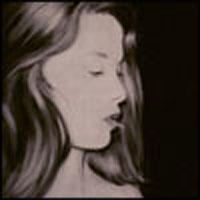
NEDA: Joe's first attempt at the human form. The girls are all on their own canvases. They're undressed, stepping out of a darkened space. Some of them look like they're about to say something.
JOE ANDOE: And I'm just following my gut. I'm painting these pictures and I don't really know why. You know, and after a few months I was sitting back and I was sort of reflecting. I was looking at all of these things, and I noticed that they all looked the same. They all looked like the same girl.
NEDA: Looking over all the paintings in the studio, they clearly are the same girl, but in a dozen different angles. She has the look of a 16 year old in 1972.
JOE ANDOE: Like my first love kind of thing.
NEDA: Her name was Kay.
JOE ANDOE: It was like my first soulmate. The first—you know how the first time you feel like you're not alone?
NEDA: She's beautiful. Oval face, almond eyes that look right into you.
JOE ANDOE: And then I remembered this moment with her and me and the horse in the car.
NEDA: Joe realized he'd been painting a memory—the fragments of one afternoon 30 years earlier, each ingredient emerging slowly.
JOE ANDOE: We were parked in the back seat of my Nova, '67 Nova in this pasture. And we were in the back seat, and a horse looked through the window. This is like this moment where it was like—boom!—you know, this horse is there, she's there. And—and I was in love. I had a beautiful naked girl there with me in the back seat of my car, you know? It just didn't get any better. I was skipping out of school so I wouldn't happen to be in class. You know, I was on easy street. I probably had $5 in my pocket, you know? Enough gas to get home. I had some cigarettes. I don't know.
NEDA: Why did you break up?
JOE ANDOE: [laughs] I think I cheated on her. I think that's why.
NEDA: Joe!
JOE ANDOE: I think that's what happened. I went to the lake and I did something I shouldn't have. Right, you know, in front of somebody she knew. She moved away to Minnesota for some reason. And she called me one day, and we—we went to—went out dancing, and we drank beer and danced. And I took her home to the place she was staying. She was staying with some friends in this old house behind an appliance store. And I dropped her off, and she looked at me like this and says, "Aren't you coming in?" And I says, "No, I have to go see somebody else." I forget her name.
NEDA: You had a new girlfriend?
JAD: New girlfriend. And she lit a cigarette, slammed the door and she died in a fire that night. I got a call the next morning.
NEDA: A car door slams, a girl turns and looks over her shoulder at a guy she won't be seducing that night. A fragment of a moment frozen in time.
JOE ANDOE: I mean, the funny thing is she was so spirited, if anybody was gonna come back and haunt me, she would.
NEDA: How old were you?
JOE ANDOE: Probably 21.
NEDA: How old was she?
JOE ANDOE: She was probably 19.
NEDA: That day in the car, with his girl and the horse looking in, Joe thinks the memory of that one afternoon in Tulsa might be some sort of post traumatic pleasure syndrome—an echo that bounced off Jupiter and caught up with him again.
JOE ANDOE: And then again, they're just paintings, too. They're just color. And these are just excuses for me to make another painting.
NEDA: There's something alluring about Joe Andoe's paintings. They draw you in. Maybe that's why people pay big money for them. But the only thing that anyone who wasn't there in the field with Joe, Kay and the horse can do is look from the outside into an impenetrable past that's finished. That memory, that story, is self sustaining and whole, looping endlessly in an alternate universe.
JOE ANDOE: That's the reason I don't title these. I don't put—you know, there's no—there's no ending, there's no beginning. It's just every day I stir it up again.
ROBERT: Joe Andoe has a new memoir. It's called Jubilee City and it's published by William Morrow.
JAD: We will continue in a moment.
-30-
Copyright © 2023 New York Public Radio. All rights reserved. Visit our website terms of use at www.wnyc.org for further information.
New York Public Radio transcripts are created on a rush deadline, often by contractors. This text may not be in its final form and may be updated or revised in the future. Accuracy and availability may vary. The authoritative record of programming is the audio record.