Aug 19, 2010
Transcript
[RADIOLAB INTRO]
JAD ABUMRAD: Hello. I'm Jad Abumrad.
ROBERT KRULWICH: I'm Robert Krulwich.
JAD: Today on Radiolab, our topic is the music in our heads—how does it get there? Where does it come from?
ROBERT: And why won't it go away?
JAD: Yes. Now you think that the music you listen to is your music, that it comes from the place you live, but there is such a thing as everybody's music. And we offer the next story as a—as a kind of proof. It comes to us from reporter Gregory Warner.
ROBERT: Gregory Warner, you won a journalism fellowship and they said to you you could go anywhere in the whole world. Where did you decide to go?
GREGORY WARNER: So I went to Afghanistan.
ROBERT: Have you ever been to a war zone before, by any chance?
GREGORY WARNER: I mean, I've—no.
ROBERT: Have you done any international reporting before?
GREGORY WARNER: Well actually, earlier that year I had been in Estonia covering an accordion festival.
ROBERT: [laughs]
GREGORY WARNER: So that was a prime piece of ...
ROBERT: That counts. So you play the accordion?
GREGORY WARNER: I play accordion.
ROBERT: Are you like an accomplished accordionist?
GREGORY WARNER: No.
ROBERT: No.
GREGORY WARNER: No, no. I'm just an amateur accordionist.
ROBERT: Okay.
GREGORY WARNER: But—but ...
ROBERT: So when you go to Afghanistan, do you bring your accordion with you?
GREGORY WARNER: Yeah, I brought my accordion.
ROBERT: How did that work out?
GREGORY WARNER: Well, I show up in Afghanistan, I'm carrying my accordion and I'm thinking, "Maybe this wasn't the smartest idea."
ROBERT: Because?
GREGORY WARNER: It wasn't an accordion-playing crowd. I mean, I was going down the street and women in burkas are holding their babies, and little boys will actually sob—sob!—begging you to sort of buy a piece of gum. Here I am with my shiny red accordion, and it's just not very appropriate.
ROBERT: Does there come a time when you're actually willing to use the accordion?
GREGORY WARNER: Well, it was a weeknight. It was in my living room. I find Najib who's my fixer and translator. He's working for me. He's lying on his back, and he's flinging his legs up into the air. A guard is catching his legs and flinging them back down.
[exercise sounds]
ROBERT: Why are they doing that?
GREGORY WARNER: Well, this is a kind of ab crunches.
ROBERT: That's what we're listening to now?
GREGORY WARNER: Yeah, there he's throwing his legs up, guard pushes them back down. Going up. Back down. So I figured I'd help him out. So I start playing my accordion for him.
[accordion music]
GREGORY WARNER: And it's going well. Najib's bopping his head to the tune. And then he kind of looks at me. He says, "Hey, how do you know Afghan music?" I say, "I'm not playing Afghan music." And he says, "Yes, you are." I say, No, I'm not." "Yeah, you are." I said, "No, no, no. That's like a folk song from the '60s called "Those Were The Days, My Friend." Some song that my mom used to sing.
[ARCHIVE CLIP, Gregory's mom: Those were the days, my friend.
GREGORY WARNER: Yes, that's my mom.
[ARCHIVE CLIP, Gregory's mom: We thought they'd never end. We'd sing and dance forever and a day.]
GREGORY WARNER: He says, "No, no. That's an Afghan song." And then he's back to the ab crunches. And I'm like, "No, no, no. Wait, wait, wait. Please tell me the story of Those Were The Days, My Friend."
GREGORY WARNER: So what's the story of "Those Were The Days, My Friend?" That's what we call it. Tell me about that song. [sings]
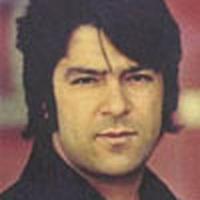
NAJIB: That song is from a singer who is famous for being a Casanova. His name is Ahmad Zahir.
GUARD: Ahmad Zahir. Famous singer in Afghanistan. It's 25 years ago.
GREGORY WARNER: How does—how does the lyrics go in ...
NAJIB: [sings in Dari]
ROBERT: Wait, wait, wait. That's—that's not da da da da da.
GREGORY WARNER: Okay, it's true. He did get it wrong. So I forgot about it. I thought he was crazy. Then it kept happening. I would bring my accordion, play it for some people. Every time people would say, "Hey, isn't that a Ahmad Zahir song?"
ROBERT: How do you say—how do you spell his name?
GREGORY WARNER: Z-A-H-I-R.
ROBERT: Ahmad—who is he?
GREGORY WARNER: Well, that's what I wanted to find out. So the first thing Najib gave me was his entire CD collection.
ROBERT: [laughs]
GREGORY WARNER: And one night I sit down and listen to it. I'm hearing one Western riff after another: John Lennon, Nat King Cole, definitely a lot of Elvis. Like, I realize on this tune ...
[Ahmad Zahir song plays]
GREGORY WARNER: This is an Ahmad Zahir tune. You can actually overlay the Elvis version right on top of it.
ROBERT: Is he stealing these tunes? Is that what you saying?
GREGORY WARNER: It's more like he Afghanized them. Like, here's one of his biggest hits, "Tanha Shodam Tanha." Now you remember this is the song that Najib sung to me, but it did sound familiar. So I emailed this tune to an old friend in St. Louis. He immediately said, "Oh, yeah. That's that Western disco hit 'El Bimbo.'"
ROBERT: Oh, that's amazing! [laughs]
GREGORY WARNER: So now this is the Western version. It's the same melody as the Ahmad Zahir version, same key even. Now let's just go back to the Ahmad Zahir version for a second. Now listen to this violin line. Da da da da da.
ROBERT: Oh, yeah.
GREGORY WARNER: So this is East meets West, Ahmad Zahir style. And this is like the mega-hit in Kabul in 1973. This is the sound of Afghanistan from the '70s.
[ARCHIVE CLIP: "Tanha Shodam Tanha"]
GREGORY WARNER: So I begged Najib to tell me more about this Ahmad Zahir guy, and finally he says, "Okay, I'll take you to meet the old childhood friend of the man himself." So we drive up to this gate, this guy with white hair opens the door. He and Najib chat for a bit. This guy named Sadat Dardar.
ROBERT: Sadat Dardar.
GREGORY WARNER: He's been friends with Ahmad Zahir since the fourth grade. And he takes us inside, he closes the gate behind us. And the scene changes. Suddenly, it's a garden, birds are chirping. And then Sadat stops and he points to this old fountain in the courtyard and he says something to Najib and Najib starts laughing. And Najib says, "You know, this is the fountain where Ahmad Zahir used to play his accordion." Ahmad Zahir plays accordion just like me.
NAJIB: He's saying that 40 girls were lying down there and he was playing accordion here, you know?
GREGORY WARNER: 40 girls?
ROBERT: 40 girls?
GREGORY WARNER: Well, they—they did call him Casanova for a reason.
ROBERT: But was that okay? Because in Afghanistan maybe girls and boys aren't supposed to, like, be hanging out.
GREGORY WARNER: Well, yes and no. Because Afghanistan was a pretty different country in those days. It's something I didn't even realize until I got there. This is the '70s. The women were wearing skirts and Jane Fonda haircuts. The men are wearing sideburns and they're doing their James Dean. And it's not just what people are wearing, it's that there's this sense of possibility in the air. Things are opening up finally. And the poster boy for all this is Ahmad Zahir. He's a bad boy.
[Sadat speaking in Dari]
NAJIB: When he had a concert, everybody, all the boys and girls would come to his concerts wearing new clothes. And not only all the girls of Afghanistan, but the foreign girls they also were in love with him.
GREGORY WARNER: Let me just play you one little clip from one of his shows, and I want you to hear a little scream that comes right in—right here.
[crowd screaming]
GREGORY WARNER: For young Afghans at the time—especially young Afghan women—Ahmad Zahir, he was like a god.
[Sadat speaking in Dari]
NAJIB: No mother will give birth a child as good as Ahmad Zahir.
GREGORY WARNER: And this is where the story gets a lot darker. It's 1973. The Russians start to move in. And the new president that they put in, he doesn't really like Ahmad Zahir at all.
ROBERT: Why?
GREGORY WARNER: Well, it was really in their interest that Ahmad Zahir would come out publicly praising the government, and he always refused to do it. Anything political, he wouldn't play the show. And some of his songs, especially the later songs, started to actually have coded anti-government lyrics in them.
ROBERT: Ay-yi-yi.
GREGORY WARNER: And then he would have other lyrics about how freedom is the most important thing.
ROBERT: So what did the government do to him?
GREGORY WARNER: They banned his songs from the radio, they started throwing him in jail kind of regularly. But even when he gets out of jail, he refuses to play any of the Communist Party events. But he plays plenty of his own shows. In fact, after one concert he meets this beautiful woman named Fahira. The way she tells the story, he taps her on the shoulder. He says, "Hey."
FAHIRA ZAHIR: He says, "Hi. Can I talk to you?" I turned my face, I said, "Yeah?" He said, "No, never mind."
GREGORY WARNER: He tapped you on the shoulder and he said, "Can I talk to you?" And then he said, "Never mind," and he walked away?
FAHIRA ZAHIR: Yeah. And he just walked away.
GREGORY WARNER: That was a pretty good seduction technique.
FAHIRA ZAHIR: I guess he was very good at it. He got lots of girls like that.
GREGORY WARNER: And he got her. And they got married, and she got pregnant. Meanwhile, the political situation was getting worse and worse. All his friends are fleeing the country. There are murders, tortures.
FAHIRA ZAHIR: Somebody came to our house, knocked the door. And he said, "Can I talk to Ahmad Zahir please?" Ahmad Zahir offered him, "Can I get you a drink?" He said, "No, no, no. I've just come from the Ministry of Interior. There is a plan for you. I don't know what they're going to do to you. That's all I want to tell you. To be careful."
GREGORY WARNER: But Ahmad Zahir and his wife, they don't do anything.
ROBERT: They don't?
GREGORY WARNER: They don't leave.
ROBERT: Why?
GREGORY WARNER: He says, "Oh, we'll go after the baby's born."
ROBERT: Oh.
GREGORY WARNER: Five days later, it's his birthday. June 14th, 1979. He's actually signing a contract for a concert that day.
FAHIRA ZAHIR: He went to sign a contract.
GREGORY WARNER: And as he's driving away, he tells her to make some lunch.
FAHIRA ZAHIR: He said when we come back we'll go shopping, and then I will make lasagna and then we'll go out.
GREGORY WARNER: So she makes lasagna and she waits for him to come back. And she waits, and then she falls asleep.
FAHIRA ZAHIR: I had a very weird dream. I'm somewhere very high in the mountains, and I have no shoes. And there's a very strong wind blowing and my hair is everywhere. And I see him not the way he went in the morning. His beard is out like he hasn't shaved for the past two days, and he has something white around him. And something is pulling him. And he's calling to me that, "I don't want to go." And suddenly I woke up. I run down, I saw my father-in-law. He wouldn't talk. He was just bending, you know, like shaking himself and bending and just holding my hand. I didn't know anything what—what happened.
ROBERT: So what happened then?
GREGORY WARNER: Well, the government says that Ahmad Zahir had a traffic accident, but everybody else tells me he was shot in the head, probably by government operatives. And the news spreads through all the neighborhoods in town. So you have Tajiks, Pashtuns, Uzbeks, they're all getting up. And not really knowing what else to do, they come walking to Ahmad Zahir's house. The courtyard starts filling up with people. 50, 100, 200. They're inside the house, they're outside the house, they're on the street. At this point the body comes, borne by six policemen on a stretcher. People start to wail, they start to push. In fact, all the windows break, the doors break. They bring the body through the courtyard into the living room, and Fahira pushes through the police, and she sees her husband's body on the stretcher.
FAHIRA ZAHIR: So I thought he was hurt or something. And when I pulled the sheet from his face, that's when I fell down on top. When I fell, they took me to the hospital and that's how Shabnam was born.
ROBERT: So does she go into labor?
GREGORY WARNER: She goes into labor.
ROBERT: Right there?
GREGORY WARNER: Yeah, yeah. And she almost dies in childbirth, but her baby's saved, she's saved. And her baby has the same birthday then.
ROBERT: Her baby was born on that very day?
GREGORY WARNER: That very day.
ROBERT: So then what happened?
GREGORY WARNER: Well, then the music basically stops. It's that winter that the Russians invade. It starts a long period of war. You have the jihad, then the Mujahideen, then the civil war. When the Taliban come in, they just ban music entirely. I mean, no instruments. We're talking 20 years where the cultural life of this country basically is frozen. I can't even imagine what that's like. I can barely go a day without hearing some tunes. 2001, the Americans come in. Afghanistan's opened back up. The radios turn back on. And who comes out of them? Ahmad Zahir.
ROBERT: So Greg, when you turn on the radio today in Kabul, do you hear Ahmad Zahir?
GREGORY WARNER: I'm telling you, it's my main way that I connect with taxi drivers. Invariably, they're listening to an Ahmad Zahir song.
ROBERT: Even now?
GREGORY WARNER: Oh, yeah.
ROBERT: Why? Because they're just not been a chance for new artists to emerge? Or it's just, you know, it was a deep freeze?
GREGORY WARNER: And also Ahmad Zahir reminds everybody of what Kabul used to be. I had this experience with my accordion again and again myself. Even when I played people my music, they'd get this smile on their face as if I was reminding them of something they knew before me. In fact, there was one time I was up north and there was this big music festival. And I had brought my accordion, and they said, "Well, why don't you play?" And I said, "Well I mean, I could play for you, sure." They said, "How about right now?" And so they kick the band that's on there off, they send them to drink green tea. They shove me up on stage. I'm standing in front of 300 Afghans, and these guys, they're not from Kabul. They don't speak English. They're not wearing suits and ties. This is a very Afghan crowd. So I figure I should play some Johnny Cash.
ROBERT: [laughs] Of course!
[ARCHIVE CLIP: accordion version of "Ring of Fire"]
ROBERT: But they're going crazy!
GREGORY WARNER: It was the best crowd I've ever had.
JAD: Greg Warner traveled to Afghanistan with support from an international reporting project fellowship from the John Hopkins School of Advanced International Studies. And if you visit our website, Radiolab.org, you can see video—actual video footage of that Johnny Cash concert. It's worth checking out.
ROBERT: Yeah, he shot it. So there you see them all in their strange non-country western clothing.
JAD: Well, we should—we're out of—we're out of time. When you're on our website, Radiolab.org, you can also send us an email: Radiolab(@)WNYC.org. I'm Jad Abumrad.
ROBERT: I'm Robert Krulwich.
JAD: Thanks for listening.
[AARON FOX: Radiolab is produced by Jad Abumrad, Lulu Miller, Rob Christensen, Ellen Horne and Tony Field. Production support by Sally Herships, Sara Pellegrini, Arielle Lasky, Heather Radke, Jesse Banco, Anna Brocko-Wayrock.]
[FAHIRA ZAHIR: Linda Everett and Soren Wheeler. Thanks to Ellen Horne and Falling Tree Productions. Josh Kurtz and Dan Hershey.]
-30-
Copyright © 2023 New York Public Radio. All rights reserved. Visit our website terms of use at www.wnyc.org for further information.
New York Public Radio transcripts are created on a rush deadline, often by contractors. This text may not be in its final form and may be updated or revised in the future. Accuracy and availability may vary. The authoritative record of programming is the audio record.