Oct 3, 2025
Transcript
LULU MILLER: Hey. Radiolab. This is Lulu. Today we're bringing you a story that begins with a very personal heartbreak—one that when you examine it, pull it up, you see is attached to this web of complex laws and decisions. It's this one very personal story with the potential to affect three million people.
LULU: Just a note that we originally reported this back in 2013, and in it people use the word 'Indian' to refer to indigenous Americans. That, of course, is a term that some folks who are indigenous use to describe themselves, but not all. So we want to acknowledge that one term is being used here to describe a huge, culturally-diverse group of people.
LULU: I'm very excited for you to hear this piece, which as you'll see is still just as relevant today. So here we go. "Adoptive Couple v. Baby Girl."
[RADIOLAB INTRO]
JAD ABUMRAD: Hey, I'm Jad Abumrad.
ROBERT KRULWICH: I'm Robert Krulwich.
JAD: This is Radiolab.
ROBERT: The podcast.
JAD: And today on the podcast, we are gonna venture into new territory for us. We have the story of a little girl who became a very, very big deal.
ROBERT: How big a deal did this little girl become?
JAD: A very big deal to about 500-something nations.
ROBERT: There aren't 500.
JAD: No, there are.
ROBERT: Look, I've seen the front of the UN.
JAD: No, there are. Just—look. Okay, it's gonna make sense in about 30 seconds.
ROBERT: Okay.
JAD: That was just a—that's a tease. It isn't ultimately even that important to the story. So just—just you and I are gonna sit right here and behave ourselves, and Tim Howard, our intrepid producer, is gonna tell us this story.
TIM HOWARD: So I first—I first heard about this story, I saw it listed on the Supreme Court docket for cases that they were gonna be hearing this spring.
MARCIA ZUG: Well, the name of the case is Baby Girl versus Adoptive Couple.
TIM: Actually, in strict legal parlance, it's called Adoptive Couple v. Baby Girl.
MARCIA ZUG: So it's not a particularly catchy name.
TIM: I gotta say it's a weird name, though. It's hard to picture.
MARCIA ZUG: Yeah.
TIM: So this is Marcia Zug.
MARCIA ZUG: Associate professor of law at the University of South Carolina.
TIM: And she wrote about this case in Slate. And it stood out to me because, you know, it just seemed odd at first that this would even be a Supreme Court case. It seemed more like a straightforward custody case.
MARCIA ZUG: Right.
TIM: But when you dig in ...
MARCIA ZUG: [laughs] There's a lot going on here.
[ARCHIVE CLIP: Crusades.]
[ARCHIVE CLIP: Text messages.]
[ARCHIVE CLIP: State law.]
[ARCHIVE CLIP: Errors.]
[ARCHIVE CLIP: Children.]
[ARCHIVE CLIP: Supreme Court.]
[ARCHIVE CLIP: Christopher Columbus.]
JAD: [laughs] Christopher Columbus.
TIM: And it is not straightforward at all.
JAD: Apparently not.
TIM: So let me walk you through it the way that I learned about it. The story begins with a couple.
MARCIA ZUG: Matt and Melanie Capobianco. They are a couple who live down here in South Carolina.
TIM: He's a technician at Boeing. She's a developmental psychologist.
MARCIA ZUG: Nice, middle class white couple.
TIM: They're in their late 30s.
MARCIA ZUG: And ...
TIM: They really wanted to have a kid.
MARCIA ZUG: They had gone through, you know, infertility problems.
TIM: It wasn't working out.
MARCIA ZUG: So ...
TIM: Eventually ...
MARCIA ZUG: And they decide to adopt.
TIM: Enter a woman named Christy Maldonado. She lives about a thousand miles away.
MARCIA ZUG: I believe she's in Oklahoma.
TIM: She's in her 20s, already has a couple kids.
MARCIA ZUG: She's pregnant, and decides that she wants to give the baby up for adoption. And she picks the Capobiancos. And everyone seems happy.
TIM: The Capobiancos get the baby, and they name her Veronica.
MATT CAPOBIANCO: We used to call her boss lady. Not a lot. Most of the time, it was ...
MELANIE CAPOBIANCO: Our family called her that.
MATT CAPOBIANCO: Yeah.
TIM: Boss lady.
MELANIE CAPOBIANCO: Because she bosses everybody around. [laughs]
TIM: This is Matt and Melanie Capobianco.
MATT CAPOBIANCO: But you were happy to do whatever she told you to do because she's just the poster child for a proud father, you know?
TIM: Hmm.
MATT CAPOBIANCO: But it's just gone as wrong as it could have possibly gone.
TIM: This is basically how it unfolded on TV news.
[NEWS CLIP: On the docket today, a young child ripped from the arms of the only parents she's ever known ...]
[NEWS CLIP: And turned over to the Native American biological father she has never met.]
[NEWS CLIP: A man Veronica had never even met.]
TIM: What happened is when Veronica was two ...
[NEWS CLIP: Her biological dad turned up ...]
TIM: Seemingly out of nowhere, and according to these clips, hadn't been around for two years, had abandoned the child. And now he's asking for custody. And he gets it.
[NEWS CLIP: And the court is making them stand by and just let it happen.]
JAD: Wait. Why?
TIM: Well, it's mainly because of this law.
MARCIA ZUG: The Indian Child Welfare Act.
MELANIE CAPOBIANCO: The 1978 Indian Child Welfare Act.
TIM: Dusten, the dad, he's Cherokee.
MATT CAPOBIANCO: He's part of the Cherokee Nation.
TIM: So that makes his daughter, Veronica, eligible to be Cherokee. And the law is designed ...
[NEWS CLIP: To keep Indian families together.]
TIM: It gives preference to Indian kids staying with Indian parents. So even though he'd actually signed papers agreeing to the adoption, he was able to invoke this law and get custody of Veronica.
JAD: He signed his custody away, and he was able to then use his Cherokee-ness to reverse the rights he signed away? Just ...
TIM: Hang on.
JAD: All right.
TIM: This is all gonna make sense.
JAD: Okay. But he takes the kid, is what you're saying.
TIM: Yeah. New year's eve, 2011, with cameras rolling, Dusten Brown drives his pickup truck into Charleston.
[NEWS CLIP: Matt and Melody Capobianco clutch to two-year-old Veronica. This could possibly be the last time they hold their baby as her mom and dad.]
TIM: And that evening, Veronica is transferred to Dusten.
MELANIE CAPOBIANCO: I didn't feel like we had enough time for her to be not afraid when she's ...
MATT CAPOBIANCO: We left her with strangers.
MELANIE CAPOBIANCO: Yeah, when she's—I mean, to her, they're complete strangers. And I can't imagine that she's not gonna be terrified.
TIM: And as Dusten gets into the truck, holding his two-year-old daughter for the first time, a reporter asks him ...
[NEWS CLIP: Do you think this is in her best interest?]
TIM: And this is all you hear from him?
[NEWS CLIP: I think so.]
[NEWS CLIP: Thank you. Have you ever seen the child before? They declined any further comment on camera.]
TIM: He gets into the truck with Veronica and they drive away back to Oklahoma.
TIM: Can I ask you when was the last time that you spoke with Veronica?
MATT CAPOBIANCO: The day after. The day after the ...
MELANIE CAPOBIANCO: Transfer.
MATT CAPOBIANCO: Transfer.
TIM: A phone call?
MATT CAPOBIANCO: Yeah. We spoke to her for about two minutes, and we told her we loved her. And she said, "I love you, Mommy. I love you, Daddy." And, I don't know, just a few minutes. But that was it. That was the last time we were able to be in touch.
TIM: And that was 16 months ago.
JAD: And how long was Veronica with them again before this happened?
TIM: About two years.
JAD: Oh man, that's hard!
TIM: Yeah. And, you know, when I first heard about this case, that's basically the only way I thought of it, you know, is just that's a crazy injustice. That's basically all I saw in it.
MARCIA ZUG: I mean, if you're someone who has no background in this, then you see a case like the baby Veronica case, and you're like, "Whoa, where is this coming from? How can this possibly be okay?"
TIM: That's Marcia Zug again. And her article for Slate kind of caught me off guard because the title was, "Doing What's Best For the Tribe: Two-year-old Veronica was ripped from the only home she's ever known. The court made the right decision."
MARCIA ZUG: Yeah.
TIM: So I called up to ask her ...
TIM: Like, what do you mean by that?
MARCIA ZUG: So one of the things that's, I think, important to realize is that the problems that ICWA was intended to address didn't stop happening that long ago.
TIM: And this is where this story turned into the biggest rabbit hole I've ever fallen into.
JAD: [laughs] What did she tell you?
TIM: I mean, Marcia basically said the only way you can begin to wrap your mind around what's right and what's wrong in this story is to go back to the '60s.
TIM: Bert, how you doing?
BERT HIRSCH: Good. How are you, Tim?
TIM: Great to meet you.
BERT HIRSCH: Same here.
TIM: And to this guy.
BERT HIRSCH: Bert Hirsch. I'm a lawyer.
TIM: He lives in Long Island now, which is where I visited him. But in 1967 ...
BERT HIRSCH: The fall of '67, I was on the staff of the Association on American Indian Affairs.
TIM: Sort of a legal advocacy group for American Indians. And he traveled all over, working with different tribes.
BERT HIRSCH: And ...
TIM: One day he gets a phone call from this guy, Louis Goodhouse.
BERT HIRSCH: The tribal chair of the Devil's Lake Sioux tribe in North Dakota.
TIM: And this guy says, "I really need your help."
BERT HIRSCH: And he said, "There's a child."
TIM: "A Devil's Lake kid, one of ours, that was just abruptly taken away by social workers."
BERT HIRSCH: The Benson County, North Dakota Social Services Agency came in, and they took little Ivan Brown away from his grandmother.
TIM: He was six.
TIM: What was their stated reason for taking Ivan away?
BERT HIRSCH: Neglect.
JAD: Because what? Because grandma wasn't—wasn't around?
TIM: No, actually. Bert says that the social workers were looking for that classic nuclear family.
BERT HIRSCH: Biological mother, biological father, children.
TIM: So when they saw him with an older relative but no mom or dad, they thought, "Uh oh!" And they took him away.
BERT HIRSCH: The tribal council was extremely upset by this. They wanted to fight a battle about this.
TIM: Bert took the case, fought it in court.
BERT HIRSCH: And we won that case, by the way. Mrs. Alex Fournier, she got Ivan back after a somewhat protracted battle.
TIM: But he began to wonder, how widespread is this?
BERT HIRSCH: So from '67 to the end of '68 into '69 ...
TIM: He visited ...
BERT HIRSCH: Tribe after tribe after tribe.
TIM: Doing interviews. And he says that everywhere he went, he would hear these stories.
DEB WELLS: I remember it vividly.
TIM: This is Deb Wells. She's a member of the Rosebud Sioux Tribe. And when she was 10 years old, a car pulled into her driveway.
DEB WELLS: Somebody come driving in, social workers. And they got out of the car, and I told my brothers and sisters, I said, "Go hide." And they had to drag us out from underneath the bed because they got around and got in the house. So then they took us to Scotts Bluff and put us in a foster home. It was horrible!
MARLA JEAN BIG BOY: This was just part of every native family's history.
TIM: This is Marla Jean Big Boy. She grew up on the Pine Ridge Reservation in South Dakota.
MARLA JEAN BIG BOY: I remember when I was young, we'd go to one of the border towns, and my grandma would say, "Stay in the car. Lock yourself in. Don't get out of the car. I'm going into the trading post, because they're gonna steal you."
TIM: Really?
MARLA JEAN BIG BOY: Yeah!
BERT HIRSCH: What we found is that on every reservation ...
MICHAEL EVANS NO HEART: My name is Michael Evans No Heart. I'm a full blood Lakota from Standing Rock Reservation.
BERT HIRSCH: You couldn't not find a family that didn't know of a child in placement.
MICHAEL EVANS NO HEART: The social services came and took me and my sister, and told my mother and dad that they were taking us into Mobridge for physical checkup. And they never got us back.
JAD: Wow!
TIM: Michael says that his dad spent the next 30 years looking for him. In any case, Bert would ask these people that he was interviewing, "What reason did the social workers give you for taking the child?" And the answers that he got ran the gamut.
BERT HIRSCH: Conditions of poverty, alcoholism.
TIM: Overcrowding.
BERT HIRSCH: Maybe they don't have adequate ventilation in the house.
TIM: No indoor plumbing. But in most cases, he says, the reasons wouldn't have stood up in court.
BERT HIRSCH: They would put papers in front of them and they would sign. They didn't know what they were signing.
TIM: Some families ...
BERT HIRSCH: If they could, they tried to fight it.
TIM: But they usually couldn't afford to.
BERT HIRSCH: Look, the tribal people are poor. So we began to do a statistical collection of data, state by state.
TIM: Asking how many Indian kids are in foster care.
BERT HIRSCH: Foster care and adoptive placement and institutional placement, juvenile facilities.
TIM: And what he arrived at at the end of that analysis is a pretty shocking number.
BERT HIRSCH: About one third of Indian children were in out-of-home placements in non-Indian settings.
ROBERT: Wow!
JAD: One third?
BERT HIRSCH: 25 to 35 percent of Indian children nationwide were in out-of-home placements.
JAD: That's a real number?
TIM: That is the real number. That's the number you see cited again and again.
BERT HIRSCH: Nobody connected the dots. Everybody thought that it was their own personal tragedy. Nobody realized that this was a pattern and a practice that was decimating these tribes.
JAD: Wait a second, wait a second. How would this happen on this scale? I mean, like, is this just a bunch of social workers making the same decision independently, or is it like a policy?
TIM: Well, this is basically social workers very much acting in the spirit of the day, because you have to keep in mind that in the '50s and '60s, you have all these government policies that are put in place, whose entire purpose is basically to try to once and for all "solve" this Indian problem that's going on and on. You've got this guy in 1953 who's a senator from Utah, who starts basically trying to terminate the tribes.
JAD: You mean, like, take away their sovereignty?
TIM: Yeah. He goes tribe to tribe, trying to convince them or force them, tell them they have no—there's no way out of it. He argues that this will be best for all of them.
ROBERT: I remember this. This was like, out of E pluribus unum, like, to integrate them into the whole.
TIM: Yeah. They will melt into the wider culture. That's what will save them. Part of this was part of the social workers that were working in this period, they were working under the auspices of this thing called the Indian Adoption Project.
JAD: Hmm.
TIM: Which was very much about that idea of, like, you take these kids from their poor conditions, and you connect them directly to white families that are looking to adopt.
JAD: So part of this was definitely top down.
BERT HIRSCH: Very much.
TIM: In any case, the end result of this is that a third of these kids are being taken away.
TERRY CROSS: There were literally communities where there were no children.
TIM: That's Terry Cross. He's the executive director of the National Indian Child Welfare Association.
TERRY CROSS: In Minnesota, there were communities where there were no children. In Alaska, there were communities where there were no children.
MARCIA ZUG: I mean, what is a culture except, you know, the ideas and traditions that you pass on to your kids?
TIM: That's Marcia Zug again.
MARCIA ZUG: If you are hemorrhaging your children, then you're gonna disappear.
TIM: So what do you do?
BERT HIRSCH: Well, it's too massive a problem. If you're trying to fight all these removals of kids on a case-by-case basis, forget about it. A national law is needed.
TIM: So Bert spent years ...
BERT HIRSCH: Walking the halls of Congress, literally.
TIM: Endless lobbying, Congressional hearings, until finally ...
MARCIA ZUG: The Indian Child Welfare Act is passed by Congress in 1978.
TIM: So it does a lot, but basically, when it comes to adoptions ...
MARCIA ZUG: ICWA has placement preferences. So the first preference would be with the immediate family. So you're removed from mom, you're placed with dad, or maybe with grandmother.
TIM: If they say no ...
MARCIA ZUG: Second preference would be someone else in the tribe. And the third is any other American Indian.
JAD: Wow. Any other?
TIM: Yeah.
MARCIA ZUG: And then after that, then the child could be placed with, you know, another family.
JAD: Wow. So if you're white and you're trying to adopt an Indian kid, you have a lot of roadblocks.
TIM: Yeah.
MARCIA ZUG: But by and large, most of us think that ICWA was probably the best federal Indian law ever passed. It did the most to help Indian tribes, respect tribal sovereignty and really fulfill the United States's trust relationship with American Indian people.
TIM: But now, because of this case, that law may be in jeopardy.
JAD: We'll continue in a moment.
JAD: I'm Jad Abumrad.
ROBERT: I'm Robert Krulwich.
JAD: This is Radiolab. Today, a look at a Supreme Court case that may determine the future of a law called the Indian Child Welfare Act, or ICWA. The story comes from producer Tim Howard. Back to him.
TIM: So in April, I went to this conference in Tulsa.
[ARCHIVE CLIP: The board of directors, council of elders.]
TIM: Big room. There were 700 people there. Most of them work in child welfare organizations in Indian communities around the country. There was some traditional Cherokee drumming. There were films, workshops, and all anybody could talk about was this case.
[ARCHIVE CLIP: But there is no issue bigger now than how the baby Veronica case may affect the Indian Child Welfare Act.]
[ARCHIVE CLIP: So please, please do keep baby Veronica and her family in your prayers.]
TIM: Everybody was on edge.
TERRY CROSS: Well, I'm really worried in this situation.
TIM: This is Terry Cross again, and he's one of the organizers. And he told me that, look, the Capobiancos ...
TERRY CROSS: I feel for them. But in what world is it okay for one family who feels they were damaged by a law to put thousands of other children at jeopardy for their own hurt? I can't imagine a world where that's okay.
MELANIE CAPOBIANCO: Well, I mean, it's hard for us to say that because, you know, that's not what motivated us.
MATT CAPOBIANCO: Our daughter is what's motivating us.
MELANIE CAPOBIANCO: How we feel? We just feel that in this case, it was a beautiful law that was put into place to prevent the breakup of families, Indian families. And I just think it wasn't really supposed to be applied to a situation like ours.
TIM: They say ...
MELANIE CAPOBIANCO: But ...
TIM: "We get that there's a huge historical wrong here, but what does that have to do with us?"
JAD: It reminds me of arguments that happen over affirmative action, weirdly.
TIM: Definitely. But here the details are so different. You know, they say this is a law that was created to protect Indian families, right? But here you've got a Hispanic birth mom, you got a white couple, and then you got a dad who's out of the picture. So you're not actually protecting an Indian family, you're forcibly creating a new one.
MELANIE CAPOBIANCO: Absolutely. I mean ...
TIM: And in the process, you're breaking up a loving home.
MELANIE CAPOBIANCO: And I don't think that was the intent of the law, ever.
MARK FIDDLER: My personal opinion is that ICWA has outlived its usefulness and causes more problems than it solves.
TIM: This is Mark Fiddler.
MARK FIDDLER: I'm one of the attorneys for Matt and Melanie Capobianco.
TIM: He also happens to be Native American himself.
MARK FIDDLER: I'm an enrolled member of the Turtle Mountain band of Chippewa Indians. That's a reservation up in North Dakota, right on the border with Canada. You know, so I kind of had a foot in two cultures, so to speak. I'd go back to the rez in the summer.
TIM: Mark actually used to argue the other side, that the most important thing was to keep Indian families together, and that Indian kids ...
MARK FIDDLER: Who were placed in non-Indian homes would experience emotional, psychological harm by being raised outside of the culture.
TIM: But then ...
MARK FIDDLER: I had a case in, I think it was '94.
TIM: Which gave him pause.
MARK FIDDLER: Ah. Boy, that's a good word.
TIM: It was a case in which this young American Indian girl ...
MARK FIDDLER: Sierra.
TIM: ... wanted to be adopted by this white couple. And Mark opposed it.
MARK FIDDLER: Even though in my heart of hearts, I knew it was probably not the right thing for the child.
TIM: He won the case. She was removed from the couple's home.
MARK FIDDLER: And Sierra would tell you herself, she had—she had a really rough life.
TIM: She bounced in and out of more than 20 foster homes, ran away many, many times, and got into serious trouble with the law.
MARK FIDDLER: And it always nagged me.
TIM: Mark says even though the tribes have suffered, that doesn't change the fact that if you take a kid out of a loving home, you're gonna cause her real harm. And he says that's why he took this case.
MARK FIDDLER: Because the Capobiancos, you know, they are among the most loving people I know.
TIM: He says they did everything you could ask.
MARK FIDDLER: They're just amazing people.
TIM: They met the birth mother, Christy Maldonado, when she was pregnant. They got to know her.
LORI MCGILL: She felt a connection to them.
TIM: That's Lori McGill. She's represented Christy since last year.
LORI MCGILL: And they were also willing to have an open adoption.
MATT CAPOBIANCO: Yeah, we still have a relationship with Christy. We love her to death.
TIM: When Christy gave birth to Veronica ...
LORI MCGILL: They were there with her in the delivery room.
MATT CAPOBIANCO: Yeah. I mean, the day she was born, I cut the cord.
LORI MCGILL: Matt Capobianco cut the umbilical cord. So ...
TIM: That's such a degree of intimacy that I ...
LORI MCGILL: I know. I mean, having given birth twice myself, the idea that anyone other than my husband would be in the room is kind of scary. But it gives you some idea of how she felt about the Capobiancos.
TIM: Now as for Dusten Brown, Veronica's biological dad, a couple months before she was born, Christy, the birth mom, sent him a text message asking him ...
LORI MCGILL: If he wants to pay child support, or he wants to waive his rights.
TIM: And he replied, "I'll waive my rights."
LORI MCGILL: Rather than pay a dime in child support.
JAD: Well, there's a contrast. So in the beginning, it sounds like he did not want to be a dad.
TIM: Yeah. And then actually, a few months later, he seems to make it even more official by signing a form agreeing to the adoption.
JAD: And then he changes his mind?
TIM: Yeah. You know, and obviously, I was wondering what was he thinking? Because you can't avoid the fact that how you feel about this guy is gonna influence how you feel about this law.
JAD: Yeah.
TIM: And so I was trying to get in touch with him. I was pestering his lawyers. You know, will he do an interview? This went on for weeks, and they were basically like, "He doesn't want to do interviews. He doesn't want to talk."
JAD: Yeah. So you didn't get him?
TIM: Yeah, I got him.
JAD: [laughs] Good!
TIM: So shortly before we were gonna wrap this story, I get an email saying, "Come to Oklahoma." So I went.
[knocking on a door]
TIM: He lives in this one-story house on this tree-lined block in a small town north of Tulsa.
TIM: Hey, how's it going?
DUSTEN BROWN: Doing good.
TIM: Okay.
JAD: What does he look like?
TIM: He's just a very normal-looking guy. A little bit of an army haircut. He had a 'stashe that night when he got Veronica, but he's clean shaven now. Big smile. So anyway, we go inside, and the first thing he tells me ...
DUSTEN BROWN: Right now, my daughter, she's not here.
TIM: ... is that Veronica is not there. She was out with his wife, Robin.
DUSTEN BROWN: She goes out with my wife.
TIM: Turns out he's remarried. In any case ...
TIM: Test test test. All right.
TIM: ... we sat down at the kitchen table and started talking.
TIM: Do you mind just—do you mind introducing yourself and telling me, like, where we are?
DUSTEN BROWN: I'm Dusten Brown. We're in Nowata, Oklahoma. This is my house. I'm part of the Wolf Clan.
TIM: Wolf Clan is one of the seven Cherokee clans.
DUSTEN BROWN: And my name, Dusten, means 'brave warrior' in Cherokee. And actually, you know, joined the army up and go over to Iraq. I'm like, "Wow, I'm here for the Cherokees." [laughs] I'm the brave warrior out in, you know, desert.
TIM: He's been a registered member since he was a little kid. His parents were members, and their parents. And he said he's proud to be Cherokee, basically because it means that he's from where he lives.
DUSTEN BROWN: It's a big deal to me.
TIM: So anyway, we started talking about the case and, you know, it gets complicated. There's a lot of detail. I'm not gonna go into all of it, but basically he and Christy Maldonado, the birth mom ...
DUSTEN BROWN: We've known each other since we were 16. We've dated off and on throughout ...
TIM: 2008, he joins the army.
DUSTEN BROWN: Basic training.
TIM: He lives on a base. It's four hours away.
DUSTEN BROWN: Four hours south.
TIM: And Christmas time that year, he basically says, let's get serious.
DUSTEN BROWN: Got down on one knee and proposed to her. Said, "Hey, I want to bring you into my life." She said, "Okay, that's just great." And almost a month later, she sent me a message saying that she was pregnant. And I was excited, I mean, to have children with her was one of the things I wanted at that time. Told her, "I can move you and your kids up to the base." Housing was gonna be free on base. There were schools for her kids. She could get a job right there on base. You know, everything was taken care of. I mean, everything was going great, you know?
TIM: And then pretty quickly the whole thing just soured. It's impossible to know exactly what happened, but Christy says that Dusten just simply didn't offer any support. He says that he did—or he tried to, at least. But shortly after she got pregnant, she basically just shut him out, stopped taking his calls.
DUSTEN BROWN: I didn't get no phone calls, no text messages, nothing from her out of the blue. And I'm just like, "Well, what's going on?"
TIM: He says that he tried to get in touch with her.
DUSTEN BROWN: Texting her up, trying to call her. Still no answer. There's a couple times that I've went back to Bristow, and went to her house.
TIM: Drove those four hours from the base.
DUSTEN BROWN: Knocked on her door. I could hear, you know, voices in the house. It sounded like her and the kids. They wouldn't answer the door for me.
TIM: And then one day, he says ...
DUSTEN BROWN: She sent me a message saying, "I don't want to be with you no more."
DUSTEN BROWN: And three weeks after that ...
DUSTEN BROWN: She's like, "Well, I want you to sign your rights over."
TIM: His parental rights.
DUSTEN BROWN: "Would you sign your rights over?"
TIM: You guys are texting this, or are you talking?
DUSTEN BROWN: Oh, the whole time we're text messaging this because she wouldn't talk to me.
TIM: What did you think it meant?
DUSTEN BROWN: To me, I just thought she wanted me to sign my rights over to her. And I'm like, this is something I really don't want to do.
TIM: He says she kept texting him that question, and looming in his mind was the fact that he just learned ...
DUSTEN BROWN: That we were gonna be going to Iraq to do a radar mission. So ...
TIM: And he starts to wonder what's the right thing to do here?
DUSTEN BROWN: You know, there was one of them chances I wasn't gonna come back. I wanted to make the right choice and let the mother be that sole parent.
TIM: And he says that he's holding out hope that if he does make it back ...
DUSTEN BROWN: We'll get back together and she'll just change her mind. Finally, I just told her, I was like, "All right. I'll sign my rights over."
TIM: Months go by, Christy has the baby. He says he doesn't know exactly when because they weren't speaking. But then ...
DUSTEN BROWN: Six days before I had to go deploy to Iraq, I get a phone call from some guy in Washington County.
TIM: A process server.
DUSTEN BROWN: Said, "Hey, we need you to sign some papers so you can sign your custody rights over."
TIM: And the guy directed him to an office right near the base.
DUSTEN BROWN: Went there and signed the paper. And ...
TIM: What did you think it meant?
DUSTEN BROWN: The whole time, I thought it was just, you know, the paperwork for me to sign custody rights to her. But when I got done signing, the guy said, "You just signed your rights away and so did the biological mother. The baby's been up for adoption. She's been living in South Carolina for four months."
TIM: Dusten says this is the first moment that he realized what was actually happening, that the baby was up for adoption. And he says that he had no idea he had just legally consented to it.
DUSTEN BROWN: I should have had a lawyer there with me. At that point in time, I grabbed the paper, and the guy looked at me and said, "If you're gonna rip that up," he said, "it's a—it's not good to do that."
TIM: That he could be arrested.
DUSTEN BROWN: And I said, "What do I gotta do?" He said, "You need to get a lawyer."
TIM: Which he immediately did. And that's why the courts have ruled in his favor, because they say that from that moment, he's clearly demonstrated that he wants to be her dad.
DUSTEN BROWN: I mean, I never, never once did I want to give up on my daughter. Never once did I want to give her up. I mean, everybody says that I gave her up. I never wanted to.
TIM: Now Mark and Lori say that if this were any other guy ...
LORI MCGILL: Any other man of any other race ...
TIM: ... the story would be over right about here.
LORI MCGILL: It's too late.
MARK FIDDLER: He wouldn't have any rights at all.
LORI MCGILL: Under every state's laws, too late. Under the federal Constitution, too late. He rejected that opportunity to become a father.
TIM: But he has one thing in his favor, says Lori. He happens to be Cherokee. And because of that fact ...
LORI MCGILL: Not only can this sort of man object, but he gets an automatic transfer of custody to him.
TIM: And Mark and Lori see that as basically the worst kind of preferential treatment.
JOHN NICHOLS: And that is unbelievable.
TIM: This is John.
JOHN NICHOLS: John Nichols.
TIM: This is Shannon.
SHANNON JONES: Shannon Jones.
TIM: They're two of Dusten's lawyers. And John says okay, there's preferential treatment.
JOHN NICHOLS: Fine. But ...
TIM: But think about why all the protections of ICWA are there.
JOHN NICHOLS: These roadblocks are there for a reason.
TIM: We went over this earlier but, you know, basically people are being manipulated out of their kids. And while you might like to think that that's ancient history ...
JOHN NICHOLS: Now fast forward to 2010.
TIM: ... he says the same thing is happening in this case.
JOHN NICHOLS: And we have a registered member of the Cherokee Nation. We have his child being given up for adoption without his knowledge and without his consent.
TIM: And they kept this adoption from him ...
JOHN NICHOLS: For months.
TIM: ... and then spring it on him six days before he leaves the country?
JOHN NICHOLS: It looks to us like it was engineered to make sure he got served, but not in enough time to where he could put up a fight.
SHANNON JONES: I believe it was absolutely intentional.
TIM: And Shannon suggests that they knew about ICWA, they knew it would apply, and they were trying to sidestep it.
SHANNON JONES: There were so many 'errors.'
TIM: You just did a little air quotes on 'errors,' didn't you?
SHANNON JONES: Yeah, I did. Because I mean ...
TIM: Like, for example, there's this one important form where Shannon says that they went out of their way to make it look like Veronica is not Native American.
SHANNON JONES: Because it would be detrimental to the adoption.
MARK FIDDLER: That's just—it's a preposterous argument. You know, the form ...
TIM: Mark and Lori say the reason that nobody put 'Cherokee' in big, bright, flaming letters is simple.
LORI MCGILL: Christy herself is predominantly Hispanic. Dusten is predominantly Caucasian and is approximately two percent Cherokee.
JAD: What? Did she say two percent?
TIM: Yeah. Veronica herself would be a little bit over one percent.
JAD: Wait, this whole thing is happening because he's only two percent?
TIM: Well ...
JAD: I feel like that changes things somehow.
TIM: Well yeah, but you have to keep in mind that Cherokee Nation doesn't care about the percentage of Cherokee in your blood. That's not how they determine their members.
JOHN NICHOLS: Being a member of the Cherokee Nation is like being a member of the United States. You are a citizen of the nation.
CHRISSI NIMMO: You know, if your parent's a US citizen, you're automatically a citizen.
TIM: That's Chrissi Nimmo, assistant attorney general for Cherokee Nation.
CHRISSI NIMMO: If your parent's a Cherokee citizen, you're not automatically a citizen.
TIM: But you can automatically apply. So it's based on direct lineage. But still, you're right, because this is the argument that is most troubling to the tribes. Both Chrissi Nimmo and Marcia Zug told me that if the Supreme Court ends up deciding that ...
CHRISSI NIMMO: ICWA is unconstitutional because it really is race based ...
MARCIA ZUG: Unconstitutional because it's a race-based preference.
CHRISSI NIMMO: ... it calls into question every single Federal Indian law. Ow! There goes Indian law. This is a case that they could use to do that.
TIM: If ICWA falls because it's unconstitutional, it could have a crazy domino effect.
MARCIA ZUG: Every single federal Indian law is premised on giving some sort of special treatment to Indians.
JAD: What would that mean concretely, if Indian law were to go away?
TIM: It means that their policing, their court system, their education, anything they do as a sovereign nation, all of that just evaporates. You know, like a tribe would just become another group of people on some land.
JAD: Huh.
TIM: That said, this is not the likely outcome. Now the Supreme Court will probably rule as narrowly as they possibly can, and as far as the tribes are concerned, they can do a lot of damage to the law without calling it unconstitutional. You know, they could allow for this certain kind of exception to ICWA, which would make it a lot easier for people like the Capobiancos to adopt.
JAD: So they could rule any number of ways.
TIM: Yeah. And the thing is that it's all strangely connected to this ...
DUSTEN BROWN: I figure maybe ...
TIM: ... three year old girl.
DUSTEN BROWN: The whole time through this, I'm thinking I'm just gonna sign custody.
TIM: So when she finally showed up halfway through my interview with Dusten ...
TIM: Hello. Hi.
TIM: ... it was kind of surreal.
DUSTEN BROWN: This is my daughter Veronica.
VERONICA BROWN: Daddy.
TIM: Hey, Veronica. I'm Tim.
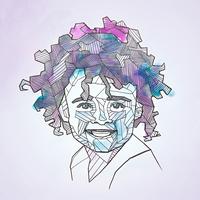
TIM: She's got dark, curly hair. She's this ball of energy.
DUSTEN BROWN: She's definitely bull-headed.
TIM: And within a minute, she's giving me a tour of every single object in her room. I mean, everything.
TIM: Who's that?
VERONICA BROWN: Army bear.
TIM: Army bear?
DUSTEN BROWN: It's got one of daddy's dog tags on it.
VERONICA BROWN: Yeah.
TIM: She was a very, very proud host. A few minutes later, she wanted to show me her geese.
TIM: I don't think I've seen geese in a long time.
VERONICA BROWN: You're about to.
TIM: I'm about to. Are these your ducks?
JAD: Those are—those are real geese?
TIM: Yeah.
VERONICA BROWN: Hi, babies!
TIM: She feeds them out of her hand.
DUSTEN BROWN: No, no, no. Don't mess with their water. Come here, babies.
[train sounds]
VERONICA BROWN: Thomas! Thomas Train!
DUSTEN BROWN: Thomas the Train?
VERONICA BROWN: Yes.
DUSTEN BROWN: Yep.
JAD: So what could happen to her?
TIM: Are they eating?
TIM: Well, if the Supreme Court said Dusten Brown shouldn't have qualified as father under ICWA, what they'd do is they would send it back down to a South Carolina court, and then they would have this new best-interest evaluation, basically, like, what's the best thing for her at this point? She's been with him now for about a year and a half, and so that actually might really change the calculation.
TIM: You know, and honestly, hanging out with her and Dusten in the backyard, it's really easy to forget all of these people whose lives are just completely tangled up in this scene, but who aren't there. Christy Maldonado, the birth mom.
LORI MCGILL: She did not intend to give Veronica up. She intended to give Veronica a life.
TIM: Matt and Melanie Capobianco.
MELANIE CAPOBIANCO: I mean, this has been going on for so long. We've kind of been in a holding pattern for, like—well, forever.
MATT CAPOBIANCO: We're just waiting and waiting and waiting.
TIM: And of course, the hundreds of tribes who are just worried about their own kids.
TIM: Pretty cool. Are you a good swimmer?
VERONICA BROWN: Yes, I'm a good swimmer.
TIM: I'm a bad swimmer.
VERONICA BROWN: You're not. You're a good swimmer!
TIM: No, I'm a pretty bad swimmer.
VERONICA BROWN: No, you're not! You're a good swimmer.
TIM: How do you know I'm a good swimmer?
VERONICA BROWN: I know you're a good swimmer. You're a good swimmer.
TIM: Well, I appreciate that.
JAD: So the Supreme Court came to a decision on this ruling about a month after we first aired this podcast, and here's what they said.
TIM: Okay. So the Supreme Court ruled 5-4 in favor of the adoptive couple, which is to say against the birth father.
JAD: So Dusten Brown, the dad, lost.
TIM: Right. It was like a 60-page ruling. And not being totally confident what all the ramifications were, I just made some calls.
MARCIA ZUG: Hi, how are you?
TIM: I'm doing great. How are you?
TIM: For example, I Skyped with Marcia Zug, who you remember from the piece.
JAD: Mm-hmm.
TIM: She's a law professor at the University of South Carolina.
TIM: Can you walk me through what this opinion means?
MARCIA ZUG: Well, in terms of Veronica's placement, had it come out the other way, then it would be over. She would stay with Dusten Brown, her biological father. End of story.
TIM: Mm-hmm.
MARCIA ZUG: What we have now is the court upholding the termination of his parental rights.
TIM: So basically, the Supreme Court ruled that Dusten Brown shouldn't have been allowed to invoke the Indian Child Welfare Act because he didn't have what's called 'continuing custody' of Veronica.
ROBERT: Continuing custody.
TIM: Right. They argue that this law is about preventing the breakup of Indian families, and there was no Indian family here because they didn't live together.
ROBERT: The dad and the daughter didn't live together.
TIM: Right. So they don't scrap the Indian Child Welfare Act, they just say that it shouldn't apply in a case like this.
ROBERT: So that's as narrow as you can get, probably.
JAD: Yeah.
ROBERT: But I have a question: what happens now when the case—where does the case go from here?
TIM: Well, the Supreme Court kicked it back down to a lower court, where you'd expect that they'd just award the Capobiancos custody. And that's what this guy said.
TEJINDER SINGH: So this is going back to South Carolina and to the state Supreme Court.
TIM: This is Tejinder Singh. He's a contributor at SCOTUSblog.
TEJINDER SINGH: And a counsel at the law firm Goldstein and Russell, which practices before the Supreme Court.
TIM: So the case goes to the South Carolina Supreme Court.
TEJINDER SINGH: And then they'll probably push the case down to their lower courts to make further decisions about whether the father has standing to object to the adoption. And assuming he doesn't, after this decision, you know, whether the adoption can just become finalized.
JAD: So it sounds like the Capobiancos will ultimately get Veronica back.
TIM: Possibly, yeah. But Marcia says that there's a chance that it might not go that way.
MARCIA ZUG: So now she's up for adoption, right?
TIM: This is where it gets complicated. So because the Supreme Court said that ICWA still stands, it's still law.
JAD: Okay.
TIM: And they said that Veronica is an Indian child, she's Cherokee.
ROBERT: Okay.
TIM: That means that the South Carolina Supreme Court could decide that she is still covered by the Indian Child Welfare Act.
JAD: Huh!
MARCIA ZUG: My understanding of the case, they're not saying that ICWA doesn't apply with the placement preferences.
TIM: You remember the placement preferences?
JAD: Yeah.
TIM: If the court decides that this is still an ICWA case, then those preferences would kick in. So if you recall, according to ICWA ...
SOLANGEL MALDONADO: When an Indian child is placed for adoption, her extended family members would be given first preference, right?
TIM: This is Solangel.
SOLANGEL MALDONADO: Solangel Maldonado, Joseph M. Lynch professor of law, Seton Hall University School of Law.
TIM: So in an ICWA case, the first preference is extended family. Second preference ...
SOLANGEL MALDONADO: Other members of the Cherokee tribe would be next in line.
TIM: Third preference ...
SOLANGEL MALDONADO: Other Indian families. This means an Indian family from any of the 562 federally-recognized tribes, and then finally, any other family, such as the Capobiancos.
TIM: So if the South Carolina Supreme Court decides that this is still an ICWA case, and if ...
SOLANGEL MALDONADO: The paternal grandparents file a petition to adopt, they are at the very top of the mandatory placement preferences, and the Capobiancos are at the very bottom.
JAD: Wow.
ROBERT: Wow.
JAD: So it's possible the Capobiancos might not get custody.
TIM: Yeah. And Marcia even says that there's a chance that Dusten Brown himself ...
MARCIA ZUG: My guess is that Dusten Brown ...
TIM: ... will come forward to adopt Veronica.
MARCIA ZUG: His rights were terminated because he failed to support, but now we've got basically two years worth of evidence of him loving and supporting and taking care of her. And the court's not going to ignore that.
TIM: It's just so crazy to think, though, that this guy, who's the biological father, may ultimately become the adoptive father.
MARCIA ZUG: That's insane. Yes.
JAD: Damn, this is complicated! I thought that it was supposed to get less complicated.
TIM: You know, John Nichols, Dusten Brown's lawyer, he said to me that this is totally uncharted waters.
JAD: Uh-huh?
TIM: That he's never seen a case of this magnitude get decided by the Supreme Court and still be so open ended.
ROBERT: What's the timetable on this? So ...
TIM: John said that they expect to hear something from the South Carolina Supreme Court on Monday, July 8, just laying out, like, what the next steps are.
JAD: So Tim, let me ask you. We spent a fair amount of time in the story examining the worst-case scenario from the tribe's perspective, that this case could be used as a kind of Trojan horse to say that all of Indian law is an unfair race-based preference and therefore should be negated.
TIM: Right.
JAD: I'm gathering from what you just said that that did not come to pass.
TIM: No, that didn't happen. But there is this sense that they kind of planted a seed. For example, Justice Alito, who wrote the ruling, he starts it off with mention of Veronica being, you know, 1.2 percent Cherokee.
JAD: Hmm.
TIM: Which is interesting because it sounds like he's about to make an argument for why this is a race-based preference and why it's a violation of equal protection.
JAD: Like he's about to go nuclear if that's how he starts.
TIM: Exactly. Which to me was kind of baffling, because why would you start off with this massive footprint and then leave a very small one? You know, is it to send a message?
JAD: Hmm.
TIM: So anyway, I asked Marcia what she thought about it.
TIM: Why do you think they started it off that way?
MARCIA ZUG: I've been thinking about that. It clearly sat wrong with at least some members of the court. I mean, when listening to the oral arguments, you could tell that. You know, Roberts harped on it as well. It might have been that that was too big an issue to address in this case, that they weren't ready to. But I think it's an indication that at least some members of the court have serious reservations about Indian law because they just don't see Veronica as an Indian child. To them, Indian is a race, and she doesn't have enough blood to be of that race. It's a possible indication of where future Indian law cases are gonna go.
JAD: Producer Tim Howard. Thanks, Tim.
LULU: Okay, it's Lulu again, back in 2025. And as you just heard, there were sort of two categories of lingering questions. One about what would happen to Veronica, and the other about the Indian Child Welfare Act. So ultimately, Veronica's case wound up in family court, which found that without the application of ICWA, Dusten could not intervene. One week after her fourth birthday, Veronica was returned to the Capobiancos in South Carolina, and a few months after that, Dusten and the Cherokee Nation announced that they would not continue pursuing the case. And Veronica's life became much more private after that, away from the attention, the courts. She's now 16 years old.
LULU: As for the Indian Child Welfare Act, ICWA, it's faced repeated challenges in the past 12 years. The biggest one was in 2023, but at that time the Supreme Court upheld ICWA, 7-2. So for now it is alive and affirmed at the national level, but not without continued challenges, including a case brought before the Minnesota Supreme Court just this year challenging ICWA again. That case has not been decided.
LULU: Thanks so much for listening. We'll be back next week.
[LISTENER: Hi. [laughs] Hi, I'm Shannon Michael calling from Madison, New Jersey, and here are the staff credits. Radiolab was created by Jad Abumrad, and is edited by Soren Wheeler. Lulu Miller and Latif Nasser are our co-hosts. Dylan Keefe is our director of sound design. Our staff includes: Simon Adler, Jeremy Bloom, W. Harry Fortuna, David Gebel, Maria Paz Gutiérrez, Sindhu Gnanasambandan, Matt Kielty, Annie McEwen, Alex Neason, Sarah Qari, Sarah Sandbach, Anisa Vietze, Arianne Wack, Pat Walters, Molly Webster and Jessica Yung. With help from Rebecca Rand. Our fact-checkers are Diane Kelly, Emily Krieger, Anna Pujol-Mazini and Natalie Middleton.]
[LISTENER: Hi, I'm Maddie and I'm from Frederick, Maryland. Leadership support for Radiolab's science programming is provided by the Simons Foundation and the John Templeton Foundation. Foundational support for Radiolab was provided by the Alfred P. Sloan Foundation.]
-30-
Copyright © 2025 New York Public Radio. All rights reserved. Visit our website terms of use at www.wnyc.org for further information.
New York Public Radio transcripts are created on a rush deadline, often by contractors. This text may not be in its final form and may be updated or revised in the future. Accuracy and availability may vary. The authoritative record of programming is the audio record.