Aug 26, 2026
Transcript
[RADIOLAB INTRO]
ELLA AL-SHAMAHI: Latif, how do I pronounce your name? Because I'm pronouncing it the Yemeni way.
LATIF NASSER: Pronounce it the Yemeni way. I'm, like, excited about you pronouncing it the Yemeni way.
ELLA AL-SHAMAHI: Lateef. Lateef. Because it's used heavily by Yemenis. Lateef!
LATIF: Like, just to mean, like, something's nice or something?
ELLA AL-SHAMAHI: Yeah.
LATIF: Oh, that makes me feel so warm. Wait, now pronounce your name for me so I know what—how to say your name the Yemeni way.
ELLA AL-SHAMAHI: Oh my God. Unpronounceable. Aalaa.
LATIF: Aalaa?
ELLA AL-SHAMAHI: Aalaa. It's like at the end, it's too much. Everyone kept calling me "Allah."
LATIF: Allah.
ELLA AL-SHAMAHI: And I was like, I know I'm great, but, you know, I think that's too far, guys.
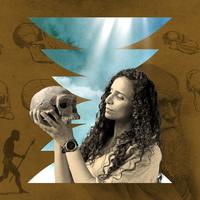
LATIF: Hey, I'm Latif Nasser. This is Radiolab, and I'm talking with Ella al-Shamahi. She's a paleoanthropologist and evolutionary biologist, and she's like honestly the modern-day Indiana Jones. She travels all over the place collecting fossils. Sometimes this takes her into active war zones or through pirate-infested waters. And she does all of this to help piece together the story of how humans came to be.
ELLA AL-SHAMAHI: The thing is about our story is kind of epic, man. Our story is epic.
LATIF: She's got a new TV show out now on the BBC and PBS, and in it she explains that the origin of our species is kind of surreal.
ELLA AL-SHAMAHI: We lived in a world that was a bit like Lord of the Rings. There was obviously the Neanderthals, who so many people have heard of. But there were all these other species, including one of my favorites, Homo floresiensis, who were basically these hobbit-like humans. They were really short. They were about three-and-a-half-feet tall. Now that means humans the size of penguins were living on this island in Indonesia called Flores. And on this island, there were giant rats and elephants the size of cows. So humans the size of penguins were hunting elephants the size of cows.
LATIF: And at the same time that you had the Neanderthals and these penguin people, there were also other groups like the Denisovans.
ELLA AL-SHAMAHI: The Neanderthals of Asia.
LATIF: There was a species called Homo naledi, another one called Homo luzonensis.
ELLA AL-SHAMAHI: This was the world that, you know, we were born into.
LATIF: A world where our little tribe was competing with these other little human-ish tribes—and often losing.
ELLA AL-SHAMAHI: We were constantly not succeeding. And then we did. And we did so in the biggest way possible.
LATIF: And the fact that we did, that it was us and not one of these other groups, Ella says that was extremely unlikely. The story of how that happened is amazing—it's what her TV show is all about. But what I wanted to talk to Ella about was this other very unlikely thing: her origin story, and the fact that she's the one telling us about all this stuff in the first place.
ELLA AL-SHAMAHI: Okay, so what you're referring to there is something which I guess I have not really known how to talk about, God, up until quite recently. In fact, one of my friends turned around and said, "Just last year, you said that you might go to your grave with this."
LATIF: Wow. Why is—why was—why has this been so tender?
ELLA AL-SHAMAHI: I—you come from a religious background.
LATIF: I do. I was very devout.
ELLA AL-SHAMAHI: No way!
LATIF: Yeah. And then I went off to high school, I went off to college, and I was like, oh, this isn't what I thought it was, and the—yeah, I don't know.
ELLA AL-SHAMAHI: I did not know that!
LATIF: Yeah.
ELLA AL-SHAMAHI: I never get to have this conversation with people who have any kind of religious background, let alone a Muslim background.
LATIF: Yeah.
ELLA AL-SHAMAHI: I—I think my fear is that I do not want my story to be a stick to beat people who are in religious communities with.
LATIF: I don't want that either. And actually, I feel like hearing Ella's story in her own words, and how surprising and insightful and moving it is, like, I think it'll do the opposite, so I just asked Ella to tell me about it, starting from the beginning.
ELLA AL-SHAMAHI: The community's incredibly tight, it was incredibly protective. It was absolutely overprotective as well.
LATIF: Yeah. Right.
ELLA AL-SHAMAHI: You know, like I ...
LATIF: As a woman, I'm sure. Yeah.
ELLA AL-SHAMAHI: Oh my God, yeah. Like, I didn't wear trousers. I didn't wear makeup. It was—it was an ultraconservative community. And I decided ...
LATIF: Where were—where were you again? Where did you grow up?
ELLA AL-SHAMAHI: Birmingham, England.
LATIF: Birmingham, yeah.
ELLA AL-SHAMAHI: Yeah. So my parents are Yemeni, but the community was kind of quite pan-Arab. And regardless of the denomination you came from or the sect or whatever, you were pretty much anti-evolution. And I really, really took to it.
LATIF: Like, for me—okay, so the way when I grew up, it was this feeling of okay, evolution is true, but Allah is this invisible hand guiding evolution. It feels like you didn't have that—yeah.
ELLA AL-SHAMAHI: No. Clearly, you know, your family isn't—clearly there were families and individuals who did explain things like that.
LATIF: Right, right, right.
ELLA AL-SHAMAHI: But there was no space for evolution in my family. There was absolutely none in the missionary world.
LATIF: Yeah. And what did you believe? Like, what was the creation story that you believed?
ELLA AL-SHAMAHI: Yeah.
LATIF: How did you think people came to be?
ELLA AL-SHAMAHI: So I personally believed that we were created in a week, basically.
LATIF: Uh-huh.
ELLA AL-SHAMAHI: God created us in a week. As in the whole world, including Adam and Eve.
LATIF: It's weird. I feel like I know the Christian creationist story better than I know the Muslim creationist story, in a way. Or is it ...
ELLA AL-SHAMAHI: Very similar.
LATIF: Very similar.
ELLA AL-SHAMAHI: They're very, very similar. The one difference is that the Christians give God a day off.
LATIF: [laughs]
ELLA AL-SHAMAHI: Muslims are like, "God—God doesn't need a day off."
LATIF: [laughs]
ELLA AL-SHAMAHI: [laughs]
LATIF: Anyway, so Ella was all in on this version of Islam. And before she even learned how to drive, she started sharing it with other people.
ELLA AL-SHAMAHI: Yeah. I became a missionary at the age of 13 and, like, traveled the UK being a missionary.
LATIF: And missionary means, like, you were going to—who were you going to talk to?
ELLA AL-SHAMAHI: Well, I was speaking to more lapsed Muslims.
LATIF: Okay, yeah.
ELLA AL-SHAMAHI: But also to the wider public.
LATIF: That was a hard sell. What—what years were these, like?
ELLA AL-SHAMAHI: Basically, you know, in the '90s I was basically—certainly in the 2000s.
LATIF: Because I was thinking, like, after 2000 that would have been a much harder job, talking to the lay public about Islam.
ELLA AL-SHAMAHI: Well, except that we felt like we had clearly been misrepresented by these lunatics, right? By these terrorists. And also remember our communities were therefore under more attack.
LATIF: Right.
ELLA AL-SHAMAHI: It was kind of the world I knew, and I guess I have always been an all-or-nothing kind of person. Like, I'm not gonna just do it in the calm, chilled-out way that I should have done it like my siblings."
LATIF: Oh, so you were more, like, hard edge about it maybe than your siblings.
ELLA AL-SHAMAHI: I think I was more hardcore.
LATIF: Hardcore. You were more hardcore than your siblings.
ELLA AL-SHAMAHI: Yeah. I mean, you know, if you were to speak to them—and I don't want to put words in their mouth.
LATIF: No.
ELLA AL-SHAMAHI: They—they're just like, "You just didn't have any chill." You know, so it's really funny, so they look at me now, and they're like, "You still don't have chill. Like, you just went from one extreme to the—" you know?
LATIF: Right.
ELLA AL-SHAMAHI: Which is really funny because they're not wrong.
LATIF: Was it one of those things, like I remember for us, like, it was like, a bunch of my friends, like, they would go to the mosque, they would go to masjid there, but then it's like, afterwards, like, it's like Friday night. Like, we're gonna go out drinking and we're gonna have fun. It was like that kind of thing.
ELLA AL-SHAMAHI: No. We would have had thoughts about you. [laughs]
LATIF: No, no. I didn't do that. But my buddies did that, and I was the straight edge kid who was like, "No, no, no. I'm not drinking, I'm not—I'm not doing anything."
ELLA AL-SHAMAHI: Yeah. So I was so strict that those guys wouldn't have even been my friends.
LATIF: Yeah.
ELLA AL-SHAMAHI: Except that I might have taken them on as projects.
LATIF: Right.
ELLA AL-SHAMAHI: So okay, imagine you're a—a missionary, and you're that age, and you're good. Right?
LATIF: Yeah.
ELLA AL-SHAMAHI: Your big thing that's hanging over you is what you're gonna do in university.
LATIF: Because that was a big deal in your family?
ELLA AL-SHAMAHI: Yeah, in our family, having a master's degree is the equivalent of a high school education.
LATIF: Wow! Okay, and so who are—what are all these people—what do they study?
ELLA AL-SHAMAHI: All kinds of things. Historians. Some legal but, like, theology kind of legal minds.
LATIF: Okay.
ELLA AL-SHAMAHI: And my dad was very encouraging of us going into the sciences.
LATIF: Other people from her community had studied science to go into medicine or engineering, but Ella had a different idea.
ELLA AL-SHAMAHI: I was like, I'm gonna go study evolution because I'm gonna destroy Darwin's theory.
LATIF: Wow!
ELLA AL-SHAMAHI: Yeah, to tackle the underlying assumptions of things. To—to basically proselytize my version of it, you know? "Okay, so you're saying it's like this. Well actually, have you considered it's actually like this?"
LATIF: Yeah.
ELLA AL-SHAMAHI: "Have you considered the data could actually fall into this interpretation instead?"
LATIF: Why was that the thing you fixated on?
ELLA AL-SHAMAHI: Because I'm a missionary. My whole—my whole purpose is, like, to bring people to the message, to bring people to God.
LATIF: Right.
ELLA AL-SHAMAHI: And—and one of the biggest reasons why they're not is that they believe that God doesn't exist, and—and the reason for that is that evolution exists.
LATIF: It's like the same debate from, like, Darwin's time. Like, it's like, "Oh, we're ..."
ELLA AL-SHAMAHI: Oh my God, yeah.
LATIF: "You think we came from apes? We came from God."
ELLA AL-SHAMAHI: Yeah. That whole monkey story ain't gonna fly, kind of thing.
LATIF: So—so okay, so when you applied, like, what did you say, or what did they ...
ELLA AL-SHAMAHI: Yeah, somebody asked me this recently. They were like, "Hold on. Hold on. So you sat there in the interview and you were like, 'Yeah, so I'm just gonna be destroying your theory from the inside.'"
LATIF: Yeah, that's right. Yeah. What did you say?
ELLA AL-SHAMAHI: [laughs] None of that. I just was, like, "I really want to study genetics. I think it's amazing. I love all the evolution classes. Blah, blah, blah, blah."
LATIF: But you were lying? That was a lie?
ELLA AL-SHAMAHI: I mean ...
LATIF: Was it?
ELLA AL-SHAMAHI: I guess so. I'm not happy with the fact that you use that word, but I guess it was.
LATIF: Yeah.
ELLA AL-SHAMAHI: Because it was—it was a lie of omission.
LATIF: Right.
ELLA AL-SHAMAHI: For sure. Yeah, well actually, I guess it must have been a lie, because when they ask you why do you want to study this, the actual answer is, "Because I want to destroy this." And I clearly wasn't saying—oh, damn it! [laughs]
LATIF: Did you—was this, like, a private mission? Or did you talk to people about this?
ELLA AL-SHAMAHI: My—my—the other missionaries all knew about this.
LATIF: Yeah.
ELLA AL-SHAMAHI: So yeah. But it wasn't, you know—I was never turning around telling the, you know, other classmates who I was.
LATIF: So you were a double agent, basically?
ELLA AL-SHAMAHI: I like the sound of that. [laughs] I mean, if you'd have known me at the age of 18, I was a dork. So ...
LATIF: Yeah.
ELLA AL-SHAMAHI: ... the idea of being a double agent is somewhat hilarious. Look, I was obsessed. I was a woman on a mission. And so I turn up to University College London, which for those of you in the know, is known as the godless place on Gower Street, because it's the first university to have, like, allowed non-Church of England ...
LATIF: Wow.
ELLA AL-SHAMAHI: ... people to kind of join up. And I went to the Darwin building, because Charles Darwin himself, he—he lived there. And that was my department.
LATIF: Wow!
ELLA AL-SHAMAHI: And by the way, like, it's kind of hilarious, because I was, like, dressed in very, very conservative Muslim garb. I wasn't even dressed in a hijab, I was in full—so I wasn't just in the head covering, I was in the full jilbāb, which was like, a full cloak.
LATIF: Yeah.
ELLA AL-SHAMAHI: Not—by the way, not that there's anything wrong with—like, with—with dressing however you want. I'm like, man, you just be you, you know? There were a few girls in hijab, actually, but they were interested in more medical genetics.
ELLA AL-SHAMAHI: I remember there was one girl who was also kind of vaguely associated with my world kind of thing.
LATIF: Yeah.
ELLA AL-SHAMAHI: And she was there, and I was so excited because I thought I'd found like a partner in her. I was like, "Oh my God!" And I was sitting there and I was like, "Right, so this bit of the theory, like, I'm just thinking that actually there's a different interpretation that we can have for this data," blah blah blah, and she just freaked out, and she looked at me and she was just like, "Look, I'm here because this is a mandatory course. I have to pass this evolution class, otherwise I don't get my degree."
LATIF: Like, she had a firewall up.
ELLA AL-SHAMAHI: Yeah. So there's, like, two things going on, right? So I'm just living my life, being a missionary.
LATIF: Yeah.
ELLA AL-SHAMAHI: I have an arranged marriage, like, via my imam, by the way. My—my dad wasn't even involved.
LATIF: That started in university or in grad school? Or ...?
ELLA AL-SHAMAHI: It was my first semester at university.
LATIF: Really?
ELLA AL-SHAMAHI: The imam suggested to me that yeah, he wanted me to marry one of his other students. And I was like, "Okay." And so that took a while.
LATIF: Were you excited about it? Were you flattered? Was that—did that feel good, or did that feel icky?
ELLA AL-SHAMAHI: You know what? Like, I—I didn't know him. I had three chaperoned meetings with him to decide if I was gonna agree to marry him. And then we basically never talked, ever. I can't explain it enough. I just didn't know him.
LATIF: Right.
ELLA AL-SHAMAHI: You know? And, like, we had to get my dad to agree. And so that took a while because dad didn't want me getting married before I'd finished my first degree.
LATIF: Right.
ELLA AL-SHAMAHI: And so we had to wait. I mean, effectively what I was doing was trying to unpack a massive puzzle. Now everybody else had already unpacked it 150 years ago. And I'm coming along being like, "Hold on."
LATIF: "Hold on. We can put these pieces together another way."
ELLA AL-SHAMAHI: Yeah. We can just ...
LATIF: Yeah.
ELLA AL-SHAMAHI: You haven't thought of something. Give me a minute. And by the way, some people do that to great success.
LATIF: Yeah.
ELLA AL-SHAMAHI: Some people have won Nobel Prizes on the back of this. I just picked the wrong puzzle.
LATIF: Right.
ELLA AL-SHAMAHI: [laughs]
LATIF: So Ella is going to class every day, learning about the evidence for evolution and the story the scientists say that that evidence tells us. And of course, she's looking for holes in that story. And one of the first holes that Ella had always noticed was that particular moment in evolution when one species somehow, like—poof!—becomes another. And then one day, she's sitting in class, and the professor starts talking about this experiment.
ELLA AL-SHAMAHI: The drosophila fruit fly experiment.
LATIF: Yeah.
ELLA AL-SHAMAHI: So basically because drosophila live for such a short amount of time you can basically, like, you know, instead of it being, you know, a mountain pops up between two animals and it takes, like, you know, hundreds of thousands of years for them to evolve, you're doing it with drosophila in a lab, and you're kind of doing it in a much shorter timeframe. You're just kind of separating them.
LATIF: Yeah.
ELLA AL-SHAMAHI: And without getting into it, they were starting to see the process of speciation in the lab. And I was like, "Oh, that's not good."
LATIF: Because if we're watching them become new species, we're watching evolution, which I don't think happened.
ELLA AL-SHAMAHI: Yeah. But my—my only comfort with that experiment was that it was being done in the lab, and I just thought, "Okay, but that might not be happening in nature."
LATIF: Yeah.
ELLA AL-SHAMAHI: Maybe it's being forced in the lab. Maybe in nature that wouldn't be happening.
LATIF: But she keeps going to more lectures, and eventually she's running into other problems like ...
ELLA AL-SHAMAHI: Stratigraphy, which is the layers of earth and that kind of sequence of animals that you get in them. And they are broadly chronological.
LATIF: Yeah.
ELLA AL-SHAMAHI: And you do see an evolutionary process there.
LATIF: Yeah.
ELLA AL-SHAMAHI: You just do. It's really, really hard to explain.
LATIF: It's like you dig deeper, you see simpler things, kind of, generally.
ELLA AL-SHAMAHI: Yeah. You know, it is—you would be looking at these stratigraphic sequences. And it was a—you know, forgive my language, but it was a motherfucker. Because you were just like, right, we haven't gone from complex to simple. By and large we go from simple to complex.
LATIF: Right.
ELLA AL-SHAMAHI: Or more complex. And it was just a consistent pattern. And it's very, very hard to explain that. So then I was like, okay, theologically, the real, real issue is Adam and Eve. Right? So technically speaking, I can believe in evolution as long as it's not Adam and Eve. As long as it's not us. We're the exception. Right?
LATIF: Right. So you're like, okay, so you gave a little ground. You were like, "This makes sense. I can give—"
ELLA AL-SHAMAHI: Yeah. A lot of ground. All other species.
LATIF: All other species.
ELLA AL-SHAMAHI: All the other billions.
LATIF: That's right. But not us.
ELLA AL-SHAMAHI: Yeah. And then what happened was I came across retrotransposons, which are very, very complicated to explain, but basically it's like a foreign organism's DNA within our own bodies.
LATIF: So retrotransposons. They're little bits of DNA from, for example, a virus that infected our ancestors millions of years ago and just, like, got stuck in our genome and passed on from generation to generation. They're like this little historical record of something that happened to us a long, long time ago. And the reason Ella remembers this is that when she was learning about retrotransposons in a lecture, the professor mentioned this weird fact about these little bits of DNA.
ELLA AL-SHAMAHI: The pattern of mutations within the retrotransposons that we have ...
LATIF: Yeah?
ELLA AL-SHAMAHI: ... align on a family tree with what you would expect from evolution if you then looked at those same retrotransposons within chimps.
LATIF: In other words, these little bits of DNA—I mean, there are hundreds of them—are lodged in the chimp genome in exactly the same places that they're lodged in our genome.
ELLA AL-SHAMAHI: How does that—like, the only interpretation for the mutations that you find in retrotransposons is that it's evolution through descent with modification over, you know, hundreds of thousands of years. There's no other interpretation.
LATIF: Like, God would have had to copy–paste or something?
ELLA AL-SHAMAHI: Yeah, like, this is the thing, because one of the arguments that—for those of you who don't know—one of the arguments that creationists use to explain well, why is our DNA so similar, right? Like, why is our DNA so similar to chimps? They're like, "Yeah, but they look similar, and they have so many similar behaviors, and there are so many similar mechanisms" and blah, blah. And on the level, on one level, you're like, "Oh, okay. That is actually—like, there is some logic to that."
LATIF: Yeah.
ELLA AL-SHAMAHI: Retrotransposons, they're not functional.
LATIF: Yeah.
ELLA AL-SHAMAHI: It's not like, oh, it's a bit of DNA that helps me process, for example, water, or helps me process carbohydrates.
LATIF: Right.
ELLA AL-SHAMAHI: It's a non-functional bit of DNA, and yet its mutation pattern fits almost perfectly with an evolutionary family tree.
LATIF: Hmm.
ELLA AL-SHAMAHI: And it was just, like, ahhh! It's just—sorry, that's the noise that you make when your whole life is about to fall apart. [laughs] Like, that—that exact noise is the noise you make.
LATIF: Wow.
ELLA AL-SHAMAHI: And I was just in hell. Like, I was in hell. There'd be times when I would just be looking out my window, just going, "Oh my God. Like, what is this? Like, what am I gonna do?"
LATIF: Were you living with this guy at that point? Or what—what were you ...
ELLA AL-SHAMAHI: This guy. My ex-husband. Yeah.
LATIF: You're married?
ELLA AL-SHAMAHI: Yeah. Our marriage wasn't doing great, partly because we had an arranged marriage and we didn't know each other. But partly for a number of different reasons, one of which was this issue. Like, you know, he, like—I was clearly struggling. And then there was a moment, just an awful moment which was kind of—I was just in the shower, and as you often do in the shower you're kind of just having a conversation with yourself. You're also, you know, bluntly naked, and—and you're very exposed. But you're in a safe place, right? And I kind of—I basically—I basically tell myself that I have to find the strength to be honest, that I just—I believe in evolution. And I just fell to the floor. Like, I just—I was, like, hysterically crying. I was just so—so distraught. And the reason I was so distraught at this point was that I knew that meant I was gonna have to leave my world.
LATIF: How do you leave your whole world and try to join another one? And what does it do to you if you do that? We'll be right back.
LATIF: Hey, I'm Latif Nasser. This is Radiolab. I'm talking with Ella al-Shamahi, who went into college as a creationist and came out an evolutionary biologist, a 180° that she feared would basically destroy her life as she knew it.
ELLA AL-SHAMAHI: I had no idea what was gonna happen with my family because, you know, it hadn't happened in my family before, right? But what I did know is it was gonna drive a massive wedge, because it's such an extreme thing in my world to say that you believe in evolution. And, you know, that's just—we just didn't do that. And by the way, all cases where that did happen, let me tell you, loads of those girls got cut off. Thank god my siblings came through in—in the way that they did.
LATIF: Wow. How did they come through?
ELLA AL-SHAMAHI: They decided to embrace me regardless. They decided that I was their sister regardless. Makes me want to cry.
LATIF: And what about, like, your friends and other people in the community?
ELLA AL-SHAMAHI: I didn't tell people. I just disappeared.
LATIF: You just ghosted people?
ELLA AL-SHAMAHI: Yeah. I literally just disappeared. And that's because I was a missionary and I knew the training. And the training is if somebody, you know, falls, you go collect them, basically.
LATIF: Yeah.
ELLA AL-SHAMAHI: And I did not have the energy. And also—this is the strange thing—I didn't want anyone else to follow me because I didn't want them to go through what I was going through.
LATIF: Right.
ELLA AL-SHAMAHI: I was, like, "No. You know what? You don't need to learn about evolution. You just stay where you are." [laughs]
LATIF: Yeah. Yeah.
ELLA AL-SHAMAHI: "This is awful."
LATIF: Yeah.
ELLA AL-SHAMAHI: It was a truly awful time. I had no idea how to exist in a secular world.
LATIF: Hmm.
ELLA AL-SHAMAHI: Suddenly every single thing did not have a rule attached to it. Which you might think is freeing, except if that's the only thing you've ever known, that's terrifying.
LATIF: Yeah.
ELLA AL-SHAMAHI: It was like you went into the bathroom with the left foot, you left it with the right foot. You wrote with your right hand, you—you ...
LATIF: The Prophet would have done this in this situation.
ELLA AL-SHAMAHI: Yeah. It's every single thing is prescribed. And suddenly it was like, good luck. I didn't make eye contact with men.
LATIF: Yeah.
ELLA AL-SHAMAHI: I literally never made eye contact with men. I—I took my headscarf off, and I basically—I turned up to the—to, like, a gas station.
LATIF: Yeah.
ELLA AL-SHAMAHI: And it was the most anticlimactic.
LATIF: [laughs]
ELLA AL-SHAMAHI: [laughs] And it's probably informed a huge part of my personality since. Because no man cared. But I had been told my whole life that, like, you know, my hair was, like, an—an ...
LATIF: Right.
ELLA AL-SHAMAHI: You've gotta cover up because it's a fitnah—it's, like—it's corruption. Like, it corrupts the Earth if you—it's a bad translation. But, like, you know, it's all those things that—these things you've got to do. Nobody cared. Like, nobody cared. Nobody—I cannot express this enough. There were no men dropping from my sheer beauty. Nobody was fainting. Nobody was doing anything. Like, nobody cared. And it was so funny!
LATIF: Wow!
ELLA AL-SHAMAHI: But it was—you know, it was quite an adjustment. It was like, "I've—I've got to now learn to fit in." And it's funny, because I think anthropologists traditionally—and, you know, I'm a paleoanthropologist—you know, you kind of go and—and sit with these "exotic"—inverted commas—tribes and you kind of learn their ways.
LATIF: Right.
ELLA AL-SHAMAHI: And I was like, "My exotic tribe is just central London."
LATIF: Right. Right. Right. Yeah.
ELLA AL-SHAMAHI: That's it. Me. And I would sit there studying people's behavior and, like, going, "All right, so this is how they act. Okay, so this is—okay, all right. So that's—" You know, I wrote a book about the handshake, right? Writing a book about the handshake does not come because somebody is, like, just casually not question—writing a book about the handshake comes when you are obsessively reading the behavior of every person around you.
LATIF: Right.
ELLA AL-SHAMAHI: Because in your culture you never shook hands with men.
LATIF: Right.
ELLA AL-SHAMAHI: I had this one friend who was just, like, "Oh, you must be so relieved to be free." And I was just like, "Do you understand the trauma that I've just been through? I didn't want this. This isn't what I wanted."
LATIF: Right.
ELLA AL-SHAMAHI: Certainly, like, now, 10, 13 years later I can look back and go, I'm glad that, you know, I'm not constrained by dogma unless I pick that dogma. But, you know, let's not pretend that this is a fun world. I mean it's—I'd definitely rather be here, but let's not pretend it's perfect. Like, I think the community thing is such a—I think this is what I have found really, really, really difficult to explain to so many of my secular friends who are basically my tribe now. Let's be honest, right?
LATIF: Yeah.
ELLA AL-SHAMAHI: I will never, ever, ever, ever be in a community like that again. I think religious communities are warm. They engulf you, they embrace you.
LATIF: Oh my God. I feel—I'm raising kids right now, and I'm not raising them in the mosque that I grew up in and it's like ...
ELLA AL-SHAMAHI: It hurts.
LATIF: ... it's sad. I—I yearn for that.
ELLA AL-SHAMAHI: It's so difficult. It was like—it was like I—I didn't know who I was anymore. And the people that were around me that would normally love me and—and knew who I was, they were all new, too.
LATIF: And in the midst of all this upheaval, Ella was still going to school, and starting to become obsessed with the thing she would spend her entire career studying—our origin story. That moment when there were all these little groups of protohumans living together on the planet at the same time, but also very much separate from one another.
ELLA AL-SHAMAHI: I think it is no surprise that having gone through what I've gone through that when I look at our story, the science of our story, I feel something. Like, I feel something. We know that everybody from outside of sub-Saharan Africa and even some people within sub-Saharan Africa have some Neanderthal DNA in them. And that can only be explained by basically one of our great, great, great, great, great grandparents having sex.
LATIF: Getting it on.
ELLA AL-SHAMAHI: Yeah. Having sex with a Neanderthal. So there's a scandal in the family, basically.
LATIF: [laughs]
ELLA AL-SHAMAHI: Now usually, right, the way this would be presented is, "Oh, this is Neanderthal DNA, so that means that there was—there was some kind of intercourse—blah, blah, blah." All right. We take a moment and instead it's like, hold on a second, right? That means that one of our ancestors—not like a theoretical—one of my and your ancestors ...
LATIF: Yeah.
ELLA AL-SHAMAHI: ... was half-half.
LATIF: Right.
ELLA AL-SHAMAHI: And I'm—I'm not mixed race, but I'm mixed heritage. So I'm a British Arab, right?
LATIF: Right.
ELLA AL-SHAMAHI: Let me tell you, that was confusing growing up, at times. Right?
LATIF: Yeah.
ELLA AL-SHAMAHI: At times I was like, "It's a bit weird." I'm like, "What would it be like to not just be mixed heritage, not be mixed race, but mixed species?"
LATIF: Yeah.
ELLA AL-SHAMAHI: Like, what would that have been like? And what would the mother have felt? Like, how would she have felt? Would she have been sitting there hoping that the child would look more Homo sapiens than Neanderthal?
LATIF: Right.
ELLA AL-SHAMAHI: Because, you know, she doesn't want them to get ostracized, she doesn't want them to get teased.
LATIF: Wow. Like, pregnant—like, that mom is sitting there pregnant—like, thinking about what her baby—whether her baby is gonna have a brow ridge or a chin or something.
ELLA AL-SHAMAHI: Seriously!
LATIF: Is there any evidence to suggest that crossovers, like Neanderthal and Homo sapiens—us—couplings—made us more successful? Like, those ...
ELLA AL-SHAMAHI: Yeah.
LATIF: Yeah?
ELLA AL-SHAMAHI: Yeah, so we were the new kid on the block. And for example, when we entered into Neanderthal territory—Neanderthal territory being kind of Europe and northern Asia—we would not have had immunities to local diseases.
LATIF: Uh-huh.
ELLA AL-SHAMAHI: So when we interbreed with those people, it's effectively like a cheat. So suddenly we end up with immunities to things that would have taken us, ourselves, tens if not hundreds of thousands of years to evolve for. There are some really, really good examples, actually. And the best one is the Tibetan example. Are you familiar with this one?
LATIF: No. Tell me.
ELLA AL-SHAMAHI: So Tibetans live at obviously very high altitude, and the mechanisms, the genetic mechanism by which they are able to exist at high altitude is very different from the genetic mechanism that exists in other populations who exist at high altitude. And the mutation is actually one that they inherited off Denisovans.
LATIF: Like, we drank their superpowers, kind of thing?
ELLA AL-SHAMAHI: [laughs] Yeah. Yeah.
LATIF: Okay, so now—so there are these sort of hybrid people.
ELLA AL-SHAMAHI: Yeah.
LATIF: And—and you are kind of—like, in a way you're—you're one of these crossover people? I mean, this experience, this ordeal that you went through.
ELLA AL-SHAMAHI: So are you.
LATIF: Yeah, yeah, yeah. But, like, what—so okay, so if this is—if that's the value of the crossover person, it's like, oh, I can get—I now have superpowers from both worlds or something, what did you gain from that crossover?
ELLA AL-SHAMAHI: I would say I was so traumatized by it—and still am. Like, within a, like, a second, I could get quite upset about it. And I think when you've been through that, you are much more patient with people who deny the science, don't trust the science. Because I understand that I am—when I am trying to persuade somebody of a scientific point, nine times out of ten I'm not trying to persuade them of one scientific point. I'm effectively taking apart their worldview.
LATIF: Yeah.
ELLA AL-SHAMAHI: And because I've gone through that, I approach that with empathy, by and large. It doesn't mean that every so often I don't get irritated, but I just fundamentally, at my core, understand that when somebody has that belief, it's not one belief. It's a belief system. And I then approach it as such. So then what's—what I find myself doing is I actually have less interest in debating that point with them, and more interest in bonding with them as a person, and showing them who I am and me seeing their humanity. That's why it gently does it for me, in terms of methodology. And also, fundamentally in my mind accepting that they may never believe me. They may never accept my version of events and that's okay.
LATIF: Ella al-Shamahi. Stick around, because coming up we've got another story where identity and nature collide.
LULU MILLER: Give me a rundown of some of the creatures you've written about.
SABRINA IMBLER: Shipworms, the hairy-chested yeti crab. Today I—I talked to a researcher who studies Greenland sharks, but I was more interested in the parasitic barnacle inside the cloaca.
LULU: Oh, its private part?
SABRINA IMBLER: Yes. Yes, its multi-purpose hole.
LULU: [laughs] What makes you think, "Mmm, of all the creatures in the world, like, the one I'll talk about this—" like, what makes you go to the barnacle in the cloaca to even focus on?
SABRINA IMBLER: I—I think I'm just fascinated by the things that are strangest from my own experience.
LULU: This is Radiolab. I'm Lulu Miller, and I'm here with writer Sabrina Imbler.
SABRINA IMBLER: I'm a staff writer for Defector, which is a worker-owned sports and culture site, but I write about creatures on Defector. I have my own little—[laughs] I have my own little column.
LULU: So I'm a huge fan of Sabrina's. I read their book a few months back. It's called How Far the Light Reaches: A Life in 10 Sea Creatures. And they do this thing that I love to do but sometimes worry about doing, which is that they look to nature, they look to animals to both see the animals but also to kind of draw some human lessons. And, you know, I know that in certain ways, like, that is a cardinal sin of science reporting. Like, thou shalt not project. But they do it in this way that somehow stays scientifically rigorous and clear, and I just wanted to share their magic, their work with more people. So I called them in to read an essay that absolutely floored me, that taught me a lot about the marine world and taught me a lot about the human world. And just a content warning: the essay, it's about a creature, but it also deals with sexual assault, so decide if that's something you want to listen to today. And yeah, that's where we are headed: into the work and the mind of Sabrina Imbler.
LULU: So before I have you go in and read the essay, I do wonder, like, is there ever—is there a downside or is there danger to seeking, you know, these little kinds of human lessons, or maybe even guidance, or inspiration, or connection or resonance? Like, do you see a danger in that? Or—or is that something that ever gives you pause or that you—that you've ever thought about?
SABRINA IMBLER: It gives me pause every day.
LULU: Oh, really?
SABRINA IMBLER: I mean, I often will find myself, like, impulsively wanting to, you know, advocate for some kind of animal or not and then sort of realizing, like, it's—that's like not the most responsible way to write about that animal. I think it feels much more exciting to me to look in sort of the realm of metaphor and to find sort of, like, can this animal be a model of another way of living? Or how can learning about the life of this creature, like, really expand my own and make me consider possibilities for myself that I had never imagined.
LULU: Hmm, yeah. Okay, well so that is a perfect segue into the essay I want you to read for us, "Beware the Sand Striker." And so I guess just help us set it up. The sand striker is a marine worm that is a vicious predator. And it's so stealth, very few of the researchers who spend their lives studying it have ever seen it, right?
SABRINA IMBLER: Yes. And these worms basically burrow deep into the sand so that most of their long, worm-like body is hidden. And they just have a pair of, like, pincers, sort of, mandibles extruding from the sand and some antenna. And so if a fish happens to swim over the sand striker's jaws they'll snap shut and then they'll drag the fish down deep into the sand.
LULU: And as Sabrina was learning about the worm, they happened to be thinking about predators and predation in human society.
SABRINA IMBLER: I started writing it, I think, you know, there were a lot of conversations around #MeToo, and I was just coming to understand some experiences that I had had that I now understand were not consensual sexual or romantic experiences. And it felt like well, you know, this worm opens this portal to this larger conversation, so maybe I—I can tell the story of what happened to me alongside this worm.
LULU: Wow. All right. Take us—take us in.
SABRINA IMBLER: Okay. [laughs]
LULU: Sabrina picks up about halfway through the essay.
SABRINA IMBLER: I never told these men about my blackouts because it seemed a mortifying thing to admit—that I was a child, too inexperienced to handle liquor, too out of control to be an advocate for my own body. I would go out of my way to share these stories with friends to get ahead of the narrative. I let them fill me in on the events of the night, nodding at things I could not recall until I had reassembled the night in my mind as refracted through them. If they were happy for me then I could be happy for me. The more I bragged about those nights, the more inconsequential they became.
SABRINA IMBLER: When I first came out to my mother, she asked me if I thought I was a lesbian because so many men had been cruel to me. I knew that when she said "cruel," she meant boyfriends who had broken up with me, but instead I thought of these other men, and for a moment I wondered if she had a point.
SABRINA IMBLER: Sand strikers, or worms like them, have been around for hundreds of millions of years. Unlike dinosaur bones or ammonite shells the squishier worms did not fossilize easily. Scientists only know of ancient sand strikers from the very few geological traces they left behind: hard jaw parts, tracks in the mud, papier-mâché-like molds of spaces their bodies inhabited before dissolving. The oldest we know of lived 400 million years ago in the Devonian Age and grew to around three feet long, smaller than today's largest sand strikers but still abnormally giant for its day.
SABRINA IMBLER: Scientists describe this species of extinct worm solely based on its jaws, as no vestige of its soft body remains. Another prehistoric sand striker from just 20 million years ago left a series of L-shaped burrows found in sandstone in northeast Taiwan. The edges of the burrows were rich in iron, indicating that they may have been lined with a mucus layer to maintain their shape. And when scientists looked closer they found feather-like impressions in the rock, suggesting the repeated disturbance of sediment from a lunging creature striking and retreating, striking and retreating.
SABRINA IMBLER: These ancient worms may have been different—shorter and softer perhaps than modern sand strikers, but they hunted in the same way. Ancient fish, too, watched for dimples in the sea floor and antennae swiveling in the grit. Joana Zanol, perhaps the world's leading expert on sand strikers, told the BBC she had never seen one alive in the wild, only in museums. She traveled to East Timor on a research grant to study the worms and could not find a single one. Zanol knew the worms were there, lurking in the sand maddeningly close to her and actively affecting the ecosystem, even if she could not take a photo or see them with her own eyes. She knew, but she couldn't prove it.
SABRINA IMBLER: A few days after I graduated college, freshly moved into an anchovy-sized bedroom in Brooklyn, I opened Twitter to see everyone sharing the same Buzzfeed story. The art was everywhere—spidery black words laced across a bright red background staining my feed. It was the victim impact statement read by Chanel Miller, a young woman who was sexually assaulted behind a dumpster at Stanford. I'd been following the case vaguely, noting how it had happened near my hometown, how the media had fixated on Brock Turner's swim times. But there were so many cases like this, meaning stories of girls touched at parties, in dorms, touched outside their clothes or underneath, stories that usually did not result in police reports.
SABRINA IMBLER: Miller was still anonymous when the statement was published, and I would only later learn our similarities: how we were both half-Asian, how we grew up in the Bay Area, and once took art classes at the Rhode Island School of Design that made us feel, among other things, inadequate.
SABRINA IMBLER: "You don't know me, but you've been inside me, and that's why we're here today." Reading that first sentence, my breath caught. Part of the statement is an italicized list of questions the defense attorney had asked Miller: "Did you drink in college? You said you were a party animal. How many times did you black out?" I stared at these questions, so familiar from my own self interrogations. The first few times I revised this essay, more encounters flickered back into memory—a tagged picture on social media, an old story recounted at a party, a name that sounded too familiar on Linkedin. It's absurd how many men I've slept with have later requested me on Linkedin. I wonder if this is because Linkedin is the easiest portal with which to find me. I wonder if it's because my name appears occasionally on the internet, slotted under stories I've written. I always wonder what they want from me: forgiveness, my body, or to connect them with an editor of some magazine.
SABRINA IMBLER: After reading Miller's impact statement, I opened a browser on my phone, switched to incognito mode and Googled, "Can you consent while blacked out but awake?" I scrolled through articles, Reddit threads and PDFs. Everything seemed to say no, you cannot consent while incapacitated, so I Googled more. I rephrased my queries until they morphed from search terms to incoherent personal questions I knew the internet could not answer. How drunk to consent? What if you say yes when drunk but cannot remember? Said yes but don't remember, is it sexual assault? How do you know what you wanted while blacked out? Why do I black out so often?
SABRINA IMBLER: I wasn't even hoping for a particular answer, I simply wanted someone to plot my experience on a grid, to tell me if it was valid to feel this way, or if I just needed to get over it. I read about the clinical psychology professor Kim Fromme, who testified in Miller's case and dozens of others. Fromme has made a living by testifying in criminal cases that a person can theoretically consent to sex while blacked out. Her argument sometimes convinced me that I was at fault. I found a slideshow about alcohol and consent made by two white men who worked at a risk management consulting group. The difficult case, the presentation reads, is someone who has a high tolerance for alcohol but doesn't display the traditional symptoms due to their tolerance level. That was me: the difficult case.
SABRINA IMBLER: All nature documentaries share a familiar kind of dramatic irony, when the narrator, whether he is David Attenborough or just sounds like him, introduces you to something small, soft and witless, you know it will be devoured. This is inevitable. When you see the writhing sequined mass of a bait ball, meaning a school of fish that swims tightly in a globe, you know they will be picked off by whatever larger thing has caused them to swim so close together. In Blue Planet II, Attenborough introduces the sand striker as the sun disappears, giving way to the electric indigo of night undersea.
SABRINA IMBLER: We do not see the worm for over a minute, instead following the looping path of an ill-fated reef fish. It is hard to watch something and know it will die, but there is nothing I can change. The sand striker lunges into an attack, mandibles slicing through the brine to clamp down on the fish and drag it beneath the sand. Even if the fish managed to escape, there may be other worms lurking nearby, there are only so many places to go on the seafloor.
SABRINA IMBLER: Why is prey in nature videos always unsuspecting? Stealthy Crocodile Captures Unsuspecting Prey. World's Biggest Spider Gobbles Down an Unsuspecting Lizard. Cuttlefish Hypnotizes Unsuspecting Crab. When we watch these videos, we are supposed to marvel at the attack—whether achieved by speed, or cunning or brute force. The prey is rarely the true subject of the segment. We see a hare bounding through the snow, not to understand how it forages, but so that we can see how the arctic fox ambushes prey. We see sea lions jetting under ice to see how orcas hunt in packs. We see bee-eater birds zipping through the sky to witness the dive bombing techniques of a bald eagle.
SABRINA IMBLER: There are exceptions of course, and this isn't to say that we are told nothing about the inner lives of the prey. We learn about the hare's thick winter coat and shortened ears, we see the seals jump in and out of the water to avoid the gnashing jaws of an orca. We see the intricate community dynamics of turquoise bee-eaters jostling over nesting sites embedded in a cliff. But more often than not the documentary shifts our attention back toward the predator, and ends the segment with predation as climax—hare in fox jaw, seal blood in water, jewel-colored bird in the yellow talons of an eagle.
SABRINA IMBLER: Though prey can be caught off guard, can be surprised, can even be ambushed, prey is never truly unsuspecting. It has evolved the blueprint of its body in response to—or in anticipation of—trauma. The arctic hare is blue gray in the summer and white in the winter so it will not be seen. Certain creatures have even adapted to give up a part of their body until it can regenerate: sea slugs shedding papillae, crabs sacrificing a claw, geckos shedding a still-twitching tail as a decoy while they escape. Snakes play dead, butterflies disguise themselves as leaves, octopuses squirt ink. These adaptations are remarkable and make these creatures exceptional in our eyes, and yet would not be necessary without the constant threat of the predator.
SABRINA IMBLER: I acknowledge this metaphor of predation is cheap. I don't fault the sand striker for hunger or for hunting. It works much harder than I do—someone who buys meat already dead and plucked. Part of the reason I find its body gruesome may be a hardwired instinct in the animal in me, an animal that fears snakes and creatures that move like them. When the sand striker snatches a fish and begins to feast, it is not thinking of what the fish is feeling. It has no complex brain and no sense of morality, which means its intentions are never cruel. A worm cannot shirk a duty it does not know, but we can.
SABRINA IMBLER: I am not writing this to blame the men who have touched me when I was not aware enough to consent. Instead, I hope to place them like push pins on a board of encounters that society has framed as acceptable. I do not know what I was like in these states, what I said, how I slurred. For much of my life, the idea of conflict scared me so much that I would do almost anything to avoid causing a scene. My priority was my pride, not my body. I do not know what I would rather believe: if these men thought I wanted it, if they knew I wasn't there to consent, if they suspected at all and buried those concerns, if they didn't care.
SABRINA IMBLER: I do not know if these men knew I was gone. The clinical term is "incapacitated," but the only way I can understand it is gone, burrowed out of my body for the night. I know legally, logically, that if I was incapacitated, gone, then I could not have consented. I know that to believe this requires overturning a part of my past that I told myself was fine, pushed to the shaded areas of my mind, and allowing myself to feel. This feels like an awful amount of space to take up. In truth, I am fine most of the time.
SABRINA IMBLER: If I stretch out my memory of my life like a ribbon and held it up to the light, whole years would be threadbare—worn patches, rips, holes. In a way, this makes me feel relieved. Whatever happened in those hours of my life is lost to me forever, or if it still exists, molded into something like instinct. These are the missing hours of my life, time I have lived unconsciously, existing as a physical body in a space without the power to understand what I was doing or what was happening to me.
SABRINA IMBLER: Several years ago, a boy I knew in college wrote to me on Facebook to apologize for what he did that one night. I stared at the message, racking my brain for what it could have been. I came up with nothing. I almost texted a friend to ask, but afraid my ignorance of that night would give away my blackout I did not. I wanted to ignore the message, to block him, but I knew he lived in a city I sometimes visited, knew that some of my friends were his friends. I worried what would happen if he confronted me, if he told someone we knew about my blocking him, so I messaged back within the hour to ensure nothing would seem weird, so that I could seem impeccably unfazed. "No worries at all."
SABRINA IMBLER: Seconds later, unsure if my first message implied that something did in fact happen, I messaged again. "I'm sure it was nothing." If I were a more ruthless detective of my own life, more sure that I could love myself knowing all the things I've done and the things done to me while I was not there, perhaps I would have had the courage to ask him what he was talking about. But I am not, so I did not. No, I am not writing to blame these men, but I also am not excusing them by casting their behavior as something instilled in them by systems beyond their control.
SABRINA IMBLER: Almost every system we exist in is cruel, and it is our job to hold ourselves accountable to a moral center separate from the arbitrary ganglion of laws that so often get things wrong. This is the work we inherit as creatures with a complex brain, which comes with inexplicable joys like love and sex and making out in cars, but also the duty of empathy, of understanding what it means when someone is stumbling. My experiences are not exceptional in either they're recurrence or their severity, but I want to imagine a world in which the men around me when I was younger could have acted as a safety net, could have seen a drunk girl stumbling on a sidewalk as a person, not an opportunity. I wish they could have seen me and alerted my friends, walked me home without touching me or even just left me alone. Yes, I was fine, not in danger of choking on my vomit or passing out or hitting my head. I was fine until they found me, and then I wasn't.
SABRINA IMBLER: In certain waters, sand strikers prey on small fish called monocle breams. The breams are the color of armor, silvery bodies with one dark stripe, unabashedly plain among the flamboyant menagerie of tropical fish. They are the kind of fish it would seem who would only make an appearance in a nature documentary if they were about to be eaten. Breams feed on tiny shelled things that also lurk in the sand: copepods, shrimp and microcrustaceans. They cluster in social groups, aware of the power that comes in numbers, and multiple pairs of eyes watching the horizon for threats. Though the breams may see the expanse of black sand below them as empty, the worms lurk underneath in their mucus-lined burrows, antennae feeling for flesh the worms can grab.
SABRINA IMBLER: The deck, it seems, is stacked against the breams. The food they seek lies buried in sediment that could easily cloak the worms that seek to devour them. While observing young monocle breams in waters off Indonesia, scientists noticed the fish exhibit rather unusual behavior. It always starts with one bream who, eyes pointing downward, notices a suspicious dimple in the sand. Maybe there's a crater or stray antenna peeking above the grit. The fish inches closer in slow spurts, pausing often to assess any new movement. The others, noticing this fish's strange behavior, follow suit, hovering behind, eyes fixed on the sand. Then the first fish starts to blow, spitting jets of water toward the crater, whirling up sand and revealing the worm that lies hidden underneath.
SABRINA IMBLER: Breams are incapable of harming the sand striker, as delicate fins and even the most forceful water jet can't pierce an exoskeleton. But what they can do is expose and warn. Their spurting alerts others nearby to the worm's stealthy presence in a kind of effervescent whisper network. Once exposed, the worm might retract just one antenna. Other times it slinks back entirely into its burrow, buried too deep to hunt. Sometimes the breams only knew to spit after one of their own was taken, snatched and dragged deep into the sand. In one case, other species of small and vulnerable fish, wrasses and blennies joined the crowd, eyes pointed toward the burrow, memorizing the threat.
SABRINA IMBLER: The scientists marveled at the bream's collective action, approaching and mobbing a predator such as a sand striker invites real danger: losing a fin, a patch of scales, even dying. But the scientists never saw the worm fighting back against these mobs. They never saw a fish placed in danger by alerting others to a threat. The breams swim around the reef to forage but never veer far from their home range, refusing to be forced out. They will do what they can to make this dangerous place safe for one another.
SABRINA IMBLER: When the scientists published the paper on the monocle bream, they called their behavior "novel." And it was, in the sense that humans had never observed it before, but had we even thought to look?
LULU: Sabrina Imbler. Their most recent book is called How Far the Light Reaches: A Life in 10 Sea Creatures. It is so brilliant, so moving. Go get it. Thanks so much for listening. See you soon.
-30-
Copyright © 2026 New York Public Radio. All rights reserved. Visit our website terms of use at www.wnyc.org for further information.
New York Public Radio transcripts are created on a rush deadline, often by contractors. This text may not be in its final form and may be updated or revised in the future. Accuracy and availability may vary. The authoritative record of programming is the audio record.